The Lighter Side of Transformation

with Lisa Wessan, LICSW

Mastering Interpersonal Skills: The Art of Saying Yes and No Assertively

The full scope of Interpersonal Effectiveness focuses on improving communication, reducing social anxiety, learning to set healthy boundaries, learning to validate yourself and others, gaining confidence in asking for what you want, enrolling others to help you in your dreams and goals, and letting go of toxic relationships.

Below is an excerpt of one of my sessions for Interpersonal Effectiveness.  

Learning to say Yes when you mean Yes, and No when you mean NO

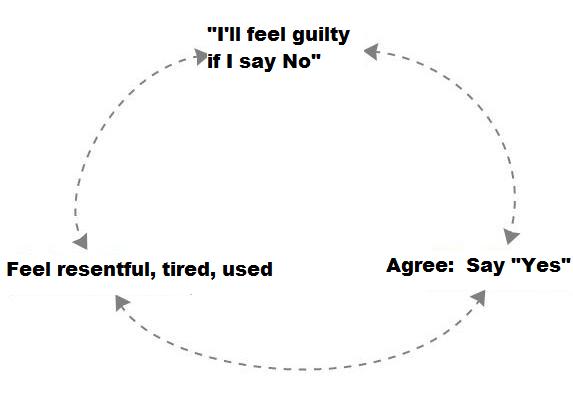
It can very often be difficult to say no to people who make demands of us, and if we say no, we can get caught up in self-critical thoughts leading us to feel guilty. To avoid feeling guilty, we just keep on saying “yes” to every request.

Someone asks us to do something: 

Say No diagram

We can learn ways of saying “No” that don’t lead us to think self-critically or feel guilty (during the group session, we practice some role playing to say No more effectively).

For example, try these suggestions on like a loose garment and see if they fit:

  • I’m sorry but I really can’t take on anything else at the moment.
  • I’m quite busy right now. Perhaps another time.
  • I’d like to help you out, but I just don’t feel up to it at the moment.
  • Thank you for asking me. You’re a nice person, but I don’t want to go out with you.
  • I don’t need a new roof (double glazing, vacuum cleaner etc). I’m happy with what I have thank you.

IMG_0393

  • If the person seems to have trouble accepting your “No,” then just keep repeating yourself.  You can learn the art of polite persistence. You might have to add the word “No” to the beginning of those statements, perhaps with some emphasis on that word. For example:
  • No. I’m sorry but I really can’t at the moment.

IMG_0394

Be wary of those self-critical thoughts afterwards. Practice challenging and/or dismissing them, by telling yourself:

  • I explained to them why I couldn’t do it.
  • It’s not my responsibility.
  • It would only end up upsetting me if I agreed to it – this is best for me. If I feel less tired and not resentful, then I might be a better position to help them out next time.

They’re just thoughts – I don’t need to pay them any attention (then put your focus of attention on something else).

The following dialectic affirmations about control and esteem can be helpful for finding that balance.

  • I cannot control some things but I am not helpless.
  • I cannot control other people but I am not helpless.
  • I am not responsible for those things I cannot control.
  • I accept those things in myself that I cannot change.
  • I can make positive choices for myself.
  • My strengths and abilities deserve my appreciation. Appreciate those abilities you have.

Create your own affirmations by completing the following sentences:

I am not powerless, I can ___________________________________________________

I have the right to refuse ___________________________________________________

I am not helpless, I can _____________________________________________________

I deserve to _________________________________________________________________

Remember, a wise person once said “Repetition is the mother of all skills…” so aim to repeat these phrases at least twice a day, with focused energy, enthusiasm and passion!

Onward and Upward✨

Lisa Wessan

___________________________________________________________________________________________
NOTES:

It takes one year to go through the full curriculum for the DBT Program.  (Some students choose to stay on for more than more year, to deepen their practice.)

During the year, we cover these modules:

  1. DBT Core Mindfulness [focusing skills]
  2. Distress Tolerance [crisis survival skills]
  3. Emotion Regulation [de‐escalation skills]
  4. Interpersonal Effectiveness [‘people skills’]

During class, we explore the act of saying “No” and turn these into powerful “Moves” to help you build new neural networks in your brain. We combine neurology, physiology and cognitive restructuring to do this, and sometimes add music and dancing to ramp up our energy. This helps you develop a fresh new response more easily and will become your “new normal”  response to people’s inappropriate or untimely requests.

** For more information, please visit www.lisawessan.com.

Copyright © by Lisa Wessan 2025. All rights reserved.

Leave a comment »

Empower Yourself: Enhance Interpersonal Effectiveness and Reduce Social Anxiety

Take charge of your social interactions and personal growth with a 14-week Dialectical Behavior Therapy Skills Training Group (DBT). Learn effective strategies from expert Lisa Wessan to build confidence, set boundaries, and communicate assertively.

You can develop skills to set healthy boundaries, communicate clearly, and become resilient to others’ disapproval. Learning effective ways to interact can reduce social anxiety and enhance your success and relationships. You’ll also discover useful strategies for making requests and easing into small talk, such as discussing work, weather, or the weekend. By focusing on skill-building rather than willpower, you can foster more fulfilling social interactions.

Developing interpersonal effectiveness skills also involves investing time, effort, and resources. Many individuals choose to develop these skills when they seek change in their behavioral patterns. Sometimes your inner dialogue says “I am sick and tired of being sick and tired! I need to do SOMETHING to turn this around!” Research suggests that focusing attention on skill development leads to improvement in those areas, including social skills.

Neale Donald Walsch once wrote, “Life begins at the end of your comfort zone.” Yes, becoming comfortable with discomfort takes time and practice. By learning neuroscience-based skills, you can improve your ability to build new neural networks and succeed in mastering interpersonal skills.

Solution-Focused Therapy

The next virtual DBT Skills Group focused on Interpersonal Effectiveness and Mindfulness will run from September 30 to December 30, 2025. The course is taught by Lisa Wessan, LICSW, CLYL, RM, who trained directly with DBT founder Dr. Marsha M. Linehan and has over a decade of group facilitation experience. This 14-week program features weekly 90-minute sessions at $80 per week, providing participants with hands-on practice in social skills within small groups of 6-10.

To learn more, please visit https://www.lisawessan.com/dialectical-behavioral-therapy

🌀🌀 Register early for DBT groups, as enrollment involves several steps. Avoid waiting until the last week to sign up.

Onward and Upward✨

Lisa Wessan

Leave a comment »

Wessan Playlist for DBT Interpersonal Skills Training

Music has been essential in my path to wellness, helping me process emotions with songs for milestones, change, grief, and loss.

Here is a selection of songs curated for our upcoming Interpersonal Skills Training. This music has been chosen to align with the themes of the training, which focuses on developing confidence, emotional awareness, and healthy boundary-setting. Participants will work on communicating clearly, saying yes or no as intended, and doing so without guilt or regret as part of the learning process.

Learning to improve your interpersonal skills, increase your emotional intelligence and reduce your anxiety is an exciting journey. May you find your path to more freedom, inner peace and joy!

I hope these songs help you get there💙

Lisa Wessan

www.mirthmaven.com

Leave a comment »

Just for Today, by Sybil F. Partridge

1.  Just for today I will be happy.  This assumes that what Abraham Lincoln said is true, that “most folks are about as happy as they make up their minds to be.”  Happiness is from within; it is not a matter of externals.

2.  Just for today I will try to adjust myself to what is, and not try to adjust everything to my own desires.  I will take my family, my business, and my luck as they come and fit myself to them.

3.  Just for today I will take care of my body.  I will exercise it, care for it, nourish it, not abuse nor neglect it, so that it will be a perfect machine for my bidding.

4.  Just for today I will try to strengthen my mind.  I will learn something useful.  I will not be a mental loafer.  I will read something that requires effort, thought and concentration.

5.  Just for today I will exercise my soul in three ways;  I will do somebody a good turn and not get found out.  I will do at least two things I don’t want to do as William James suggests, just for exercise.

6.  Just for today I will be agreeable.  I will look as well as I can, dress as becomingly as possible, talk low, act courteously, be liberal with praise, criticize not at all, nor find fault with anything and not try to regulate nor improve anyone.

7.  Just for today I will try to live through this day only, not to tackle my whole life problem at once.  I can do things for twelve hours that would appall me if I had to keep them up for a lifetime.

8.  Just for today I will have a program.  I will write down what I expect to do every hour.  I may not follow it exactly, but I will have it.  It will eliminate two pests, hurry and indecision.

9.  Just for today I will have a quiet half hour all by myself and relax.  In this half hour sometimes I will think of God, so as to get a little more perspective into my life.

10.  Just for today I will be unafraid, especially I will not be afraid to be happy, to enjoy what is beautiful, to love, and to believe that those I love, love me.

If we want to develop a mental attitude that will bring us peace and happiness, here is Rule #1:

Think and act cheerfully, and you will feel cheerful.

Written by Sybil F. Partridge   1916 and printed in
How To Stop Worrying, And Start Living, by Dale Carnegie, 1951

LW: Whenever you set a new intention, or want to develop a positive new habit, or break an old negative habit, start something new, always remember, “Progress not Perfection.” Old ways are tough to change, but it will get done. Slowly, slowly, you can do it. You can do hard things…There is a solution…Never give up💙

Leave a comment »

Reduce Political Anxiety: Use the 5 Calls App (free)

The singer/songwriter Joan Baez said it best, “Action is the antidote for despair.” Worrying is not going to help you, or this situation. Taking actions will reduce your anxiety. It will help you sleep better. It will also put your congressional representatives on alert for their constituents’ concerns.

You are not alone. The anxiety and fear arising from the often impulsive, reckless current political choices coming out of Washington, DC are hurting everyone. Democrats, Republicans and Libertarians are struggling to cope with these radical changes.

In my work, reducing anxiety and increasing distress tolerance are part of the process. When it comes to political anxiety, I know that it can be healthy to have a bit of a rant, but then you need to switch into action mode.

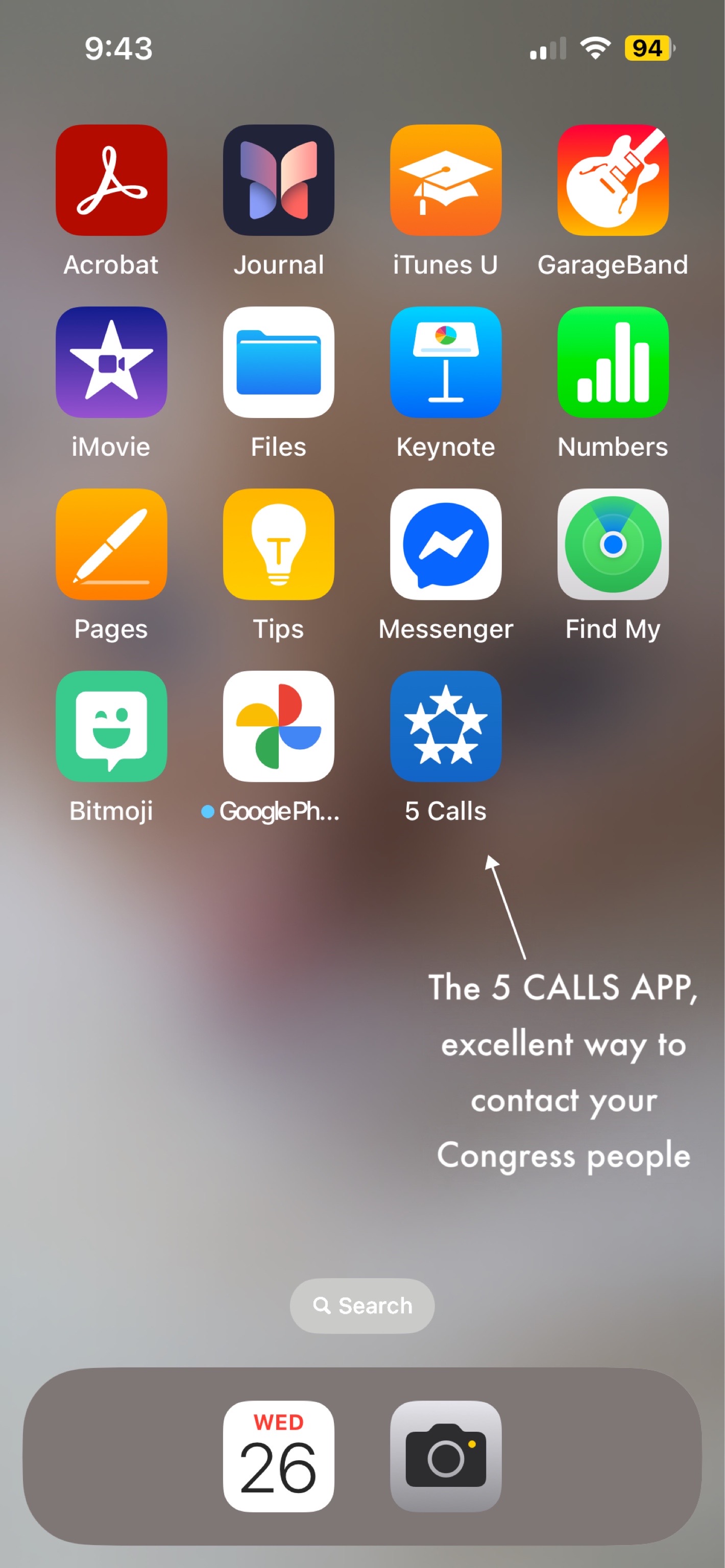
There are many ways to do this, but my favorite method is to use the 5 Calls App. Whoever designed this App deserves a Nobel prize! It lists most of the current issues that are being addressed. It’s very easy to use. You don’t have to give them your email or cell phone, just the zip code where you vote is enough.

I’ve read the science on these calls (https://5calls.org/why-calling-works/ – Scroll down to the cited articles). Yes, attending Town Hall meetings and making phone calls are the MOST EFFECTIVE ways to communicate with your congress people. Phone calls are definitely better than emails and faxes, for sure.

The App gives you sample scripts to use. I often start with the 5 Calls’ script, and then riff from that.

In sum, each phone call feels like a psychospiritual colonic cleanse! Ahh, sweet relief. You don’t have to make 5 calls in a day, one or two will do. Don’t take my word for it. Just take an action and see what happens.

Here is a screenshot of the 5 Calls App.

For example, yesterday I learned that President Trump plans to spend $92 million dollars for a military parade to celebrate his birthday. DOGE is slashing important science research at the National Institutes of Health. DOGE is also dismembering Social Security and other questionable reductions of important government services. Meanwhile, Trump is going to give himself a LAVISH parade?

Nay, nay! I immediately called my congress people and told them to block this $92 million waste ASAP. I shared my thoughts, feelings, and angst. I lowered my blood pressure and reduced my cortisol level. I felt so good after I made the calls. I am part of the solution! Being furious will not change anything. Being all wound up is ineffective. Clutching my pearls while shaking with disgust is NOT going to reverse this administration’s wrecking ball activities.

Remember, “Serenity is not freedom from the storm, but peace amidst the storm.”

May the 5 Calls App help you feel better, stronger, healthier and wiser.

Onward and Upward🌀
Lisa Wessan

Leave a comment »

UP NEXT: Fall-Winter Dialectical Behavior Therapy Skills Group (DBT)

Up Next: Mindfulness & Interpersonal Effectiveness Skills

During the Mindfulness module, you will learn how to become a more compassionate observer, be less judgmental, learn to stay focused and in the present moment, practice using the Emotion Wheel to identify all of your feelings and detach from the negative ones as needed, plus more.

In the Interpersonal Skills module, you will be exploring ways you can set healthier boundaries, ask for what you want, decline and say “NO” effectively, examine validating and invalidating relationships, and more.

🌀CURRENT DBT FLYER: Mindfulness & Interpersonal Effectiveness Skills.

FAST FACTS:
🌀 When: 14-week trimester, Tuesday evenings, 7:30 – 9:00 PM EST; September 19 – December 19, 2023
🌀 Where: On Zoom
🌀 Fees: Continuing students pay $1050; new students pay $1285 (includes one individual Intake Session).

For details and FAQ please visit www.lisawessan.com

Onward and Upward🌀

Lisa Wessan

PS – All registration forms, fees and intake sessions must be completed by 9/15/23. If this DBT work speaks to you, contact me very soon.

Leave a comment »

Some Mindfulness and Emotion Regulation Resources for a More Peaceful Holiday Season

Hi,

I hope this message finds you well.

During the holidays, especially Thanksgiving-Christmas/Hanukah/Kawanzza-New Year’s-Valentines Day, aka The Red Zone, there are many more opportunities to feeling the pain of Compare and Despair, neglect, arguments, loss, grief and a boatload of intense feelings.

You may also be forced to spend time with a relative you despise, or be tempted to eat food or drinks that make you feel sick. While being triggered all over the place, your impulse issues may be whispering in your ear, “Drink me, eat me, buy me, smoke me, shop me, gamble me, escape into video games/Netflix” on and on.

Everyone goes through this, but some of you feel it a lot more deeply.

To that end, I want to offer you a few resources from my MirthMaven archives to help you get through The Red Zone.  May you find some wonderful skills and tools here to get through those midnight blues, or whenever the intense feelings feel like too much:

  1. Extra Tools for Letting Go  (Wessan, November 2018, 25 min). You may enjoy this useful and entertaining video of ways to quickly let go of harsh feelings.
  2. The Red Zone – Chock full of tips and techniques for help with this holiday season.
  3. Compare and Despair – added insight for social media distress, feeling left out, unloved, unwanted.

As always, let’s remember that “Feelings are not Facts,” and to practice being a good observer as the storm passes through you. Reminding yourself that “This too shall pass,” “I can do HARD things” and “Never Give Up” can help to carry you through the tough times.

At the very least, remember to use the “Take 5” breathwork method: inhale to the count of five, hold for five seconds, and release to the count of five.   Repeat for at least six rounds of Take 5 breaths, to get re-centered and regain some inner calm. 

May you have a more peaceful holiday season,

Copyright © by Lisa Wessan 2019. All rights reserved.


Leave a comment »

One of my favorite dialectical quotes…

#DBT du jour:

“Love tells me I’m everything. Wisdom tells me I’m nothing. And between the two my life flows.”

– Sri Nisargadatta

What does dialectical mean?  Learn more HERE.

If you are challenged with depression, anxiety, social issues, relationship troubles, impulse issues or addiction, DBT skills will help you become healthier, stronger and more capable of coping with your emotions.  DBT is a Solution Focused therapy that gets effective results, and quickly!

Up Next:  Mindfulness and Interpersonal Effectiveness skills training in Westford, MA starts 11/06/19. Learn more HERE.

Fun fact: when you worry about the past too much, you become depressed; when you obsess about the future, you become anxious.  Learning to live in the present moment, aka practicing Mindfulness, can reduce 90% of your depression and anxiety.  Yes, you will still need to learn better ways to solve your life’s issues, but if you learn to stay in the  present  you will be so much more peaceful and useful.  Learning Mindfulness skills helps you get there.

If this speaks to you, please visit lisawessan.com and complete the CONTACT FORM.  I will contact you within 24 hours to discuss joining our next DBT group or working together individually, whatever you need.

Onward and Upward,
Lisa Wessan

Four leaf DBT


Leave a comment »

On the “Myth of Closure,” Ambiguous Loss and Complicated Grief

“Everyone experiences ambiguous loss if only from breaking up with someone, or having aging parents or kids leaving home. As we learn from the people who must cope with the more catastrophic situations of ambiguous loss, we learn how to tolerate the ambiguity in our more common losses in everyday life.” 

– Pauline Boss, Ph.D.

In my immediate family, several of my nearest and dearest have battled with cancer over the years…both of my paternal grandparents, may they rest in peace,  my dear first cousin Stephanie (may she live to be a super centenarian) and my delightful and fierce Aunt Yvette (known as “Auntie”), who is currently receiving hospice care.  It has been a long and grueling journey with cancer for all my loved ones.

Sometimes I struggle with feeling powerless, and living so far away from my family in Sarasota, FL. When they lived in New York, it was so much easier to visit. Sadly,  I can’t make frequent visits to Sarasota. The only “power” I do have is to send intentional healing and loving energy to my Auntie and family…and to practice radical acceptance so that I will function with some measure of inner peace here in my world.

For a while, my Auntie was in and out of the nursing home while she battled her cancer and other complications from treatment. Her life was severely compromised by her illness.  As harsh as this has been is for her, since April 2015,  I have also been witnessing how Auntie’s dying process is affecting everyone around her.

My cousins are fraught with anxiety and grief. Others in my family are a hot mess, watching Auntie dying so slowly, not being able to process their feelings and find some relief.  Some people get trapped in the “Blame Game,” and are always looking to find ways to defocus their pain by pointing at others.

We are all coping with the ambiguity of Auntie being here, yet not here.  She is no longer resembling her true self as we knew her.  Sometimes she is delirious, sometimes she is too weak to talk. As her body deteriorates, she is no longer living the full and robust life she once enjoyed.
ambiguous loss1

This pain we are all experiencing has a name…it is called Ambiguous Loss.  “Ambiguous loss is a loss that occurs without closure or understanding. This kind of loss leaves a person searching for answers, and thus complicates and delays the process of grieving, and often results in unresolved grief.” (Wikipedia)

There are a variety of types of ambiguous loss.  One type is when people go missing and the body is never found.  For example, a person does not return from a sailing trip, or from a hiking excursion, or war, or they are kidnapped.  Their loved ones still feel a lack of closure because the body was not found.   “Maybe they will return…” lingers in the mind.

After 9/11,  all of us in NYC were processing personal and professional ambiguous loss for all of our New Yorkers who were lost in the pile of bodies that were never recovered.

Another kind of ambiguous loss is when people experience a new emotional boundary that hurts.  This happens when people get divorced, or when someone ignores you, stops talking to you, shuts you out of their life.  Any kind of break-up creates ambiguous loss, because the person is still here, yet not here. They are alive, but dead to you.   This is considered more painful loss than when someone actually dies.
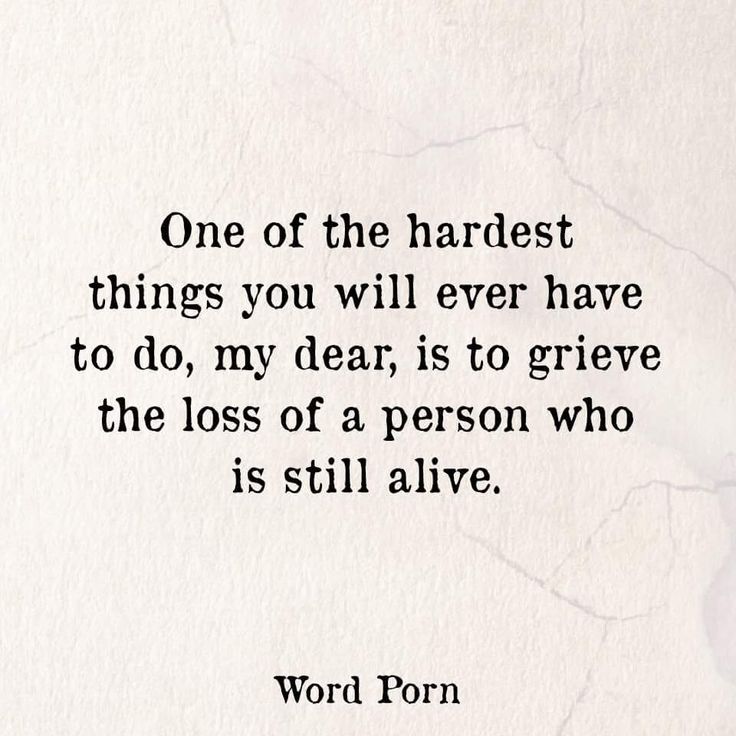
ambiguous loss3

Medical illness and addictions cause ambiguous loss.

Ambiguous loss also occurs when a loved one has Altzheimers or dementia, and they no longer recognize social connections. Similarly, when someone is very ill, such as my Auntie. We have ambiguous loss because the illness is transforming our loved one into someone other than the person we always knew. We are mourning the living remnants of our loved one while she is here…so excruciating and bitter.

When someone is living with an addiction, this too causes their personal relations to deteriorate and they are not fully present for their loved ones. Again, they are here but not here.

I have a friend who had a beautiful daughter in Cambridge, MA,  who chose to be homeless.  Her daughter was an alcoholic.  My friend tried all methods of intervention and help. Nothing worked. My friend suffered with ambiguous loss for so many years. Her daughter was a pianist, absolutely lovely.   She died a few years ago,  at 35, and it was one of the most heart wrenching tragedies I experienced.  My friend is still recovering from this painful loss.

Learning to live a good life with ambiguous loss

I recently listened to a wonderful and insightful podcast interview with ambiguous loss pioneer Pauline Boss, Ph.D., who originally coined the term “ambiguous loss.”   Krista Tippett hosts Dr. Boss on her podcast, On Being.  You can listen here:

The Myth of Closure [UNEDITED VERSION, 1.5 hours]

The Myth of Closure [EDITED VERSION, 1 hour]

I prefer the unedited versions of Tippett’s interviews, because there are sometimes fascinating nuances that are deleted to make the long form interview fit into an hour. But I’m sure whichever one you listen to will be rewarding💙

One of the ideas I took away from Dr. Boss’ talk was that we will never have complete closure from our ambiguous losses, or from our complicated grief.  What we can do is become  more adept at processing our negative feelings and difficult thoughts. Dr. Boss has some wonderful suggestions on the process.

Cognitive restructuring, which can be learned, is a big part of the solution.  Dr. Boss’ stories and explanations are very helpful in deconstructing the different kinds of ambiguous loss that we all have in our lives.

Even though I learned about ambiguous loss and complicated grief in graduate school, it seems I keep deepening my understanding of it every year.  I learn more about ambiguous loss from clients who are struggling with painful divorce, adult children with addictions, my Auntie’s battle with cancer, harsh racial and homophobic incidents and for all the ongoing loss of freedoms in the world that never seems to subside.

Fun fact: Ambiguous loss is clearly part of our psychospiritual journey — for it forces us to grow and move to new levels of compassion and acceptance of things we cannot control.  “Lack of power, that is our dilemma,” says Alcoholics Anonymous  (Bill W., 1976).  Yes, in our culture, we seek to control, cure, fix and manage everyone and everything as much as possible. We don’t like messy endings.

Yet what I have come to know, is that true mastery of life is being able to live in ambiguity with peace, even joy.  My life is far from perfect…yet I am more often feeling positive, grateful,  uplifted, inspired and anticipating good interventions that will transform it.

If we can learn to live in that “not knowing” place and be peaceful — that is a vast improvement on “hating ambiguity” and perhaps yelling at G-d or the Universe, or twisting into knots over why bad things do happen to good people…again, very messy, so annoying.

The truth is, when it comes to matters of love, there is no closure. As they say at the Grief Toolbox,  “Closure is not part of the grieving process, nor is it necessary for healing. A connection formed in love can’t be closed.”  Dr. Boss confirmed this with her years of research on ambiguous loss, leading to her forthcoming book on “The Myth of Closure.”
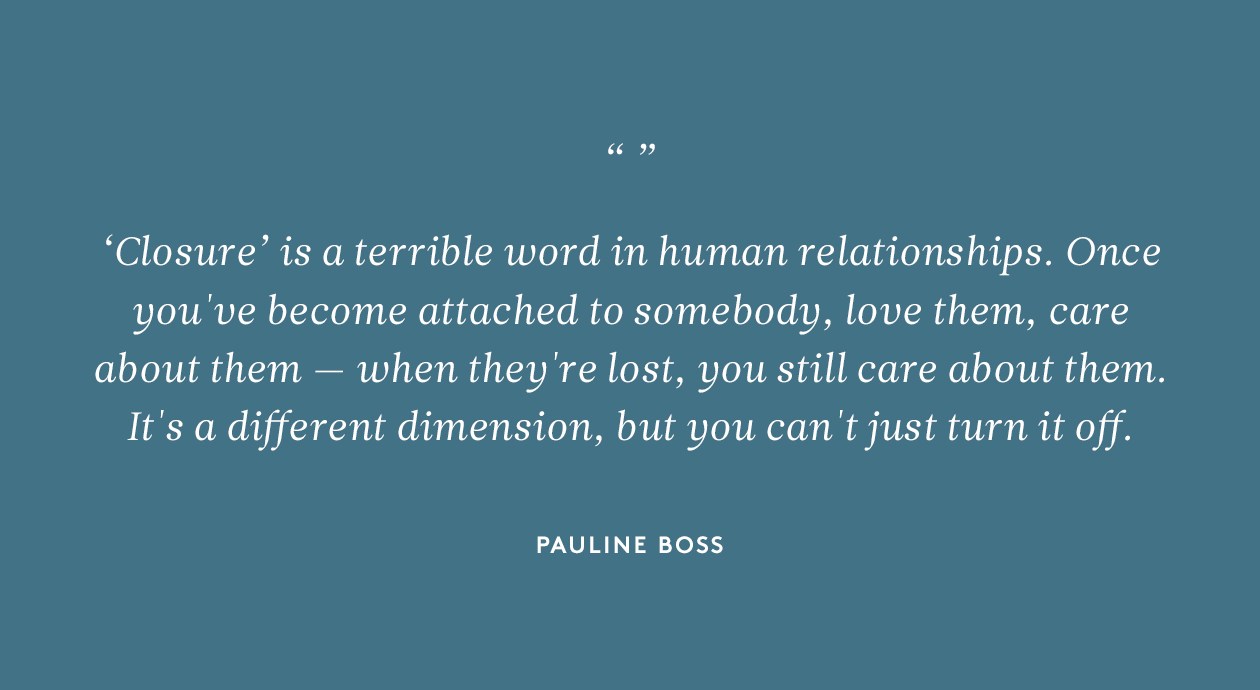
ambigousloss5

As Dr. Boss discussed in the interview, our Western culture wants neatly packaged endings and for everyone to move on as quickly as possible.   There is plenty of ignorant shaming that goes on, as in “Aren’t you over that yet?”

Sadly, our culture does not tolerate ambiguous loss very well at all.  It requires more Eastern, dialectical thinking.  To be able to say non-binary statements such as “She is alive, but also dead,”  “He is not here, but he is possibly still alive,”  or “She looks like Auntie, but this is not Auntie anymore,” requires a leap from dualistic thinking to a more dialectical thinking which allows us to embrace opposite beliefs without sinking into a deep depression or disruptive anxiety vortex.

Solution Focused Suggestions

For today, I invite you to learn more about ambiguous loss, and start to apply these non-dualistic, non-binary, dialectical thinking ideas to your situation.

  • Listen to the podcast above, and learn some skills to help process your ambiguous grief.
  • Perhaps find a good therapist who can help you learn to cope better with your struggles.  Good news: coping skills can be learned!
  • Learn to laugh at the absurdities, paradoxes and incongruities of life (Gavin, 2010; Wessan, 2013).
  • Practice your Distress Tolerance skills …join a Dialectical Behavior Therapy group.  You may then find it easier to work through the painful moments, and allow yourself to live in ambiguity with, dare I say it, some joy!


Onward and Upward🌟

Lisa Wessan


References

Gavin, J. (03 Sept 2010). Laughing with the Joys and Troubles of Life Leads to Growth. The Chelmsford Patch. Found at https://mirthmaven.blog/2010/09/16/lisa-wessan-interviewed-in-the-chelmsfor/

Pauline Ross, Ph.D. https://www.ambiguousloss.com/

W., Bill. (1976). Alcoholics Anonymous : the story of how many thousands of men and women have recovered from alcoholism. New York:Alcoholics Anonymous World Services. Fourth edition, Chapter 4, We Agnostics. P. 45. 

Wessan, L. (2013).  Using Humor and Laughter in Therapy. Focus Journal. National Association of Social Workers.  Vol. 40, No. 4. 3,11.

Copyright © by Lisa Wessan 2019. All rights reserved.
www.LisaWessan.com



2 Comments »

Moving beyond binary thinking: what are dialectical and non-dualistical truths?

“If you can recognize and accept your pain without running away from it, you will discover that although pain is there, joy can also be there at the same time.” Thich Nhat Hanh, No Mud, No Lotus

“Grief is the price we pay for love.”
Queen Elizabeth II
(21 April 1926 – 8 September 2022)

“Even when all the experts agree, they may well be mistaken.”  ~ Bertrand Russell

“In preparing for battle, I have always found that plans are useless,
but planning is indispensable.” ~ Dwight Eisenhower

“The reverse of truth has a thousand shapes
and a boundless field.” ~ Michel de Montaigne

“Do I contradict myself?
Very well then, I contradict myself,
(I am large, I contain multitudes.)”
~ Walt Whitman, Leaves of Grass

“Whoever is winning at the moment
will always seem to be invincible.” ~ George Orwell

“Family values don’t stop at the Rio Grande.”  ~ George W. Bush

“Sometimes you need to get knocked down before you can
really figure out what your fight is.” ~ Chadwick Boseman

What do all these quotes have in common?  They are blending opposing beliefs into a non-dualistic framework, which is, for most people, is not easy to hold in the mind without some cognitive dissonance.

One of the reasons I love to teach Dialectical Behavior Therapy Skills (DBT) is to help people move from binary to non-binary thinking.  In this way, DBT serves to help people live with massive emotional and cognitive dissonance and yet not have an emotional meltdown (or use self-harm to distract or medicate from the pain of holding the contrasting beliefs).

For example, when you get into the DBT flow of consciousness, you realize that you can both love and hate someone.  You realize that on some level, you are amazing, perfect and rocking “as is,” yet you can improve.  Yes, you are good enough, yet you can improve!  You realize that you are sometimes brilliant, and sometimes really foolish, but still lovable, no matter what. You embrace the FACT that you inevitably will make mistakes, but you are NOT a mistake.  You are still awesome, lovable and worthy, no matter what cocka-locka-cuckoo stunt you got into, either consciously or unconsciously. You come to accept that “There is no shame in my game!”

So dialectical thinking helps you get out of the black and white mental trap, the “All or Nothing,” Right or Wrong, Worthy or Unworthy, Perfect or Imperfect name game.  Practicing dialectical skills helps relieve so much of your negative inner dialogue, which can potentially lead you down a slippery slope, perhaps causing a spiral into a depression and even self-harming thoughts.

Over time, DBT gently muzzles the harsh inner Critic and lets you move forward with plans to grow, learn, change and improve yourself, your relationships and your life.

Borderline1

DBT makes it so much easier to “Disable the Label” of your diagnosis, gender challenge, financial issue, body image or weight issue and more.  For years, I have said that I believe DBT skills will someday soon be taught to everyone by the 3rd grade level…Now Lady Gaga, superstar and mental health advocate, has started a foundation, MENTAL HEALTH FIRST AID to bring DBT Skills Training into all the public schools in the USA. Why? Because after years of suffering, once she learned DBT Skills, she had a dramatic recovery from her mental health issues, and now she is making this possible for everyone.

It is essential that we all move out of this painful and extremely unproductive dualistic perfectionist damnation of ourselves and others!  Enough is enough, right? The exquisite radical acceptance that comes from dialectical thinking starts within, and then permeates into our relationships, politics and the world at large.

Yes, it is possible to temporarily hate ourselves for a few minutes for being a bit unconscious or even whacko in the moment, and then with the help of improved self-talk, gently shift back to a more bearable level of acceptance, possibly reach a more comfortable forgiveness level and then back to a more loving baseline. With training, this could be reduced from days/weeks of self-hate to a few minutes…that’s a big win in my practice!

This DBT process uses evidence-based skills culled from the vast Mindfulness research, Interpersonal Effectiveness, Distress Tolerance and Emotion Regulation fields.  These skills help people move from being in the extreme of “Emotion Mind” or “Rational Mind” into their “Wise Mind” and function better on every level.

Ven diagram 1 Wise Mind

Here are some of the common myths that we deconstruct in our DBT groups:

“Dialectics reminds us of the many paradoxes that are built into our Universe:

  1. The universe is filled with opposing sides/opposing forces. There is always more than one way to see a situation, and more than one way to solve a problem. Yet two things that seem like opposites can both be true.
  1. Everything and every person is connected in some way, in the way that the waves and the ocean are one. It is also believed that the slightest move of the butterfly affects the furthest star.
  2. Change is the only constant. Meaning and truth evolve over time. Each moment is new; reality itself changes with each moment.
  3. Change is transactional. What we do influences our environment and other people in it. The environment and other people influence us.” (Linehan, 2015)

For today, I challenge you to start letting go of your dualistic mind traps, end all “Compare and Despair” drama and gently start to shift into a more compassionate, empathetic and dialectical mindset that will allow yourself and others to be good enough around you, as is, while you are all improving.  Here’s the emotional math: less judging, more inner peace.  Simple, but not easy!

Onward and Upward🌀

Lisa Wessan

Reference:
Linehan, M. (2015). DBT Skills Training Handouts and Worksheets. Second edition. New York: Guildford Press. Page 150.

Copyright © by Lisa Wessan 2022. All rights reserved.
www.LisaWessan.com
1 Comment »