The Lighter Side of Transformation

with Lisa Wessan, LICSW

Understanding Toxic Positivity and Grief Management

Katie Couric spoke to a therapist about how she grieved her husband Jay’s death, the dangers of toxic positivity and the benefits of negativity.
— Read this excellent piece katiecouric.com/health/dangers-of-toxic-positivity-benefits-of-negativity

Notes on Toxic Positivity:
🌀Couric’s article reminds me of the importance of doing daily negativity maintenance to release and let go of your unexpressed grief, rage, disgust and other negative feelings. You cannot do a Spiritual or Cognitive By-Pass and remain healthy and well.

🌀Tears are the language of grief, and messy, hard crying jags are on the road to wellness.

🌀 At the same time, you need to learn to practice Grief Etiquette with what you share and with whom. Sometimes it is necessary to set boundaries with people who want to share ongoing, chronic painful issues without solutions. For example, I have one friend who would tell me incredibly detailed stories about her acne. After many years of listening to her, I just could not listen anymore. I finally got up the courage to tell her “I love you, I care about you, but I don’t want to hear about your skin issues at the granular level. Just tell me the headlines, and new treatments or solutions you are working on.” She was hurt at first, but after a few awkward weeks, she eventually accepted my boundary and we were able to move forward.

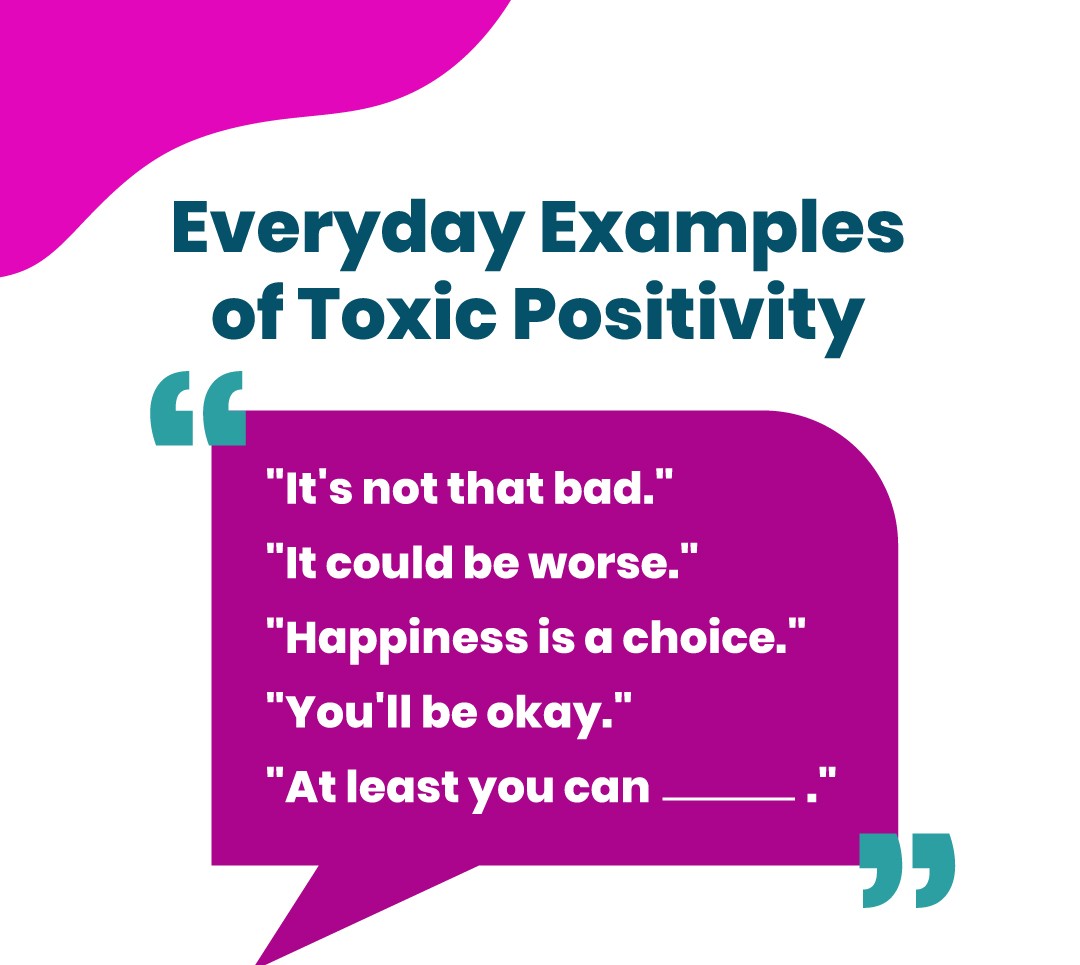
🌀After reading this article, I will never again say “Everything happens for a reason” (out loud). Mea culpa, mea culpa…
🌀Am I too positive? I have learned the lesson that “what I focus on increases, where the attention goes, energy flows.” So yes, I usually veer towards focusing on the positive – because I want to manifest a better future. I’ve learned that “thoughts become things,” so it’s worthwhile to be mindful of your negative thought streams. Yet I do not want to be toxically positive either! Couric taught me to allow more time for friends to dwell on their losses before moving into the solution focused mindset, or not at all. Sometimes people just want to talk.

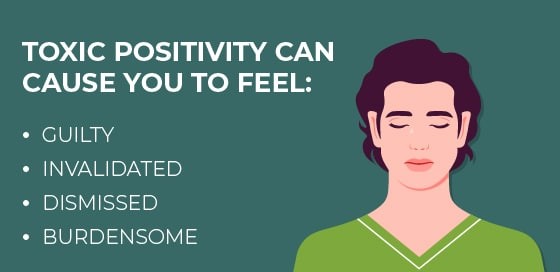
🌀I have been on the receiving end of toxic positivity too, and I don’t like it. There are loving people in my life who have basically said, “It can’t be that bad. You can do anything!” (whatever the challenge is) This kind of statement – meant to be uplifting – can actually be invalidating and hurtful. Listening is loving. In the best scenario, it’s good to hear the pain, allowing others to release their anxiety and tensions, and then eventually approach solutions. I would like to be asked, “Are you ready to discuss solutions yet, or do you need to vent some more?”  

🌀The science on this says that complaining is good for releasing the anxiety and tensions. In trauma work, it is commonly accepted that “the issues are in our tissues,” (van der Kolk, 2020), so we need to find ways to release and let go of those issues. If we don’t, that’s when we start somaticizing and develop illnesses from our unexpressed grief and negative thoughts.

🌀 In my dialectical world (DBT), I have learned to embrace the paradox of life being both amazing and harsh. Glennon Doyle said it best, “Life is both beautiful and brutal, it is BRUTIFUL!” (Doyle, 2020) The truth is none of us escape the challenges and plot twists of life. There is a Buddhist proverb that says everyone gets 10,000 Joys and 10,000 Sorrows, no exceptions. Tall, short, thin, fat, rich, poor, we all move through the 10,000 Joys and Oys of life. The key is to embrace the tough phases, using the tools of Radical Acceptance, Self-Compassion. Impermanence and Coping Ahead.

Just for today, I want to challenge you to practice being as authentic as possible, to improve your health and longevity. Start allowing yourself to release and let go of the negative streams of thought, knowing that once you clear it out solutions will arise. Then you can look for the good, be ready for the new insight, idea or fresh suggestions that come your way.
REFERENCES

Untamed, by Glennon Doyle (2020)
Toxic Positivity: Keeping It Real in a World Obsessed with Being Happy, by Whitney Goodman, LMFT (2022)

The Let Them Theory: A Life-Changing Tool That Millions of People Can’t Stop Talking About, by Mel Robbins (2024)

The Body Keeps the Score: Brain, Mind, and Body in the Healing of Trauma,  by Bessel van der Kolk M.D. (2020)


Leave a comment »

There is no bad weather, just bad clothing. – Nordic Proverb

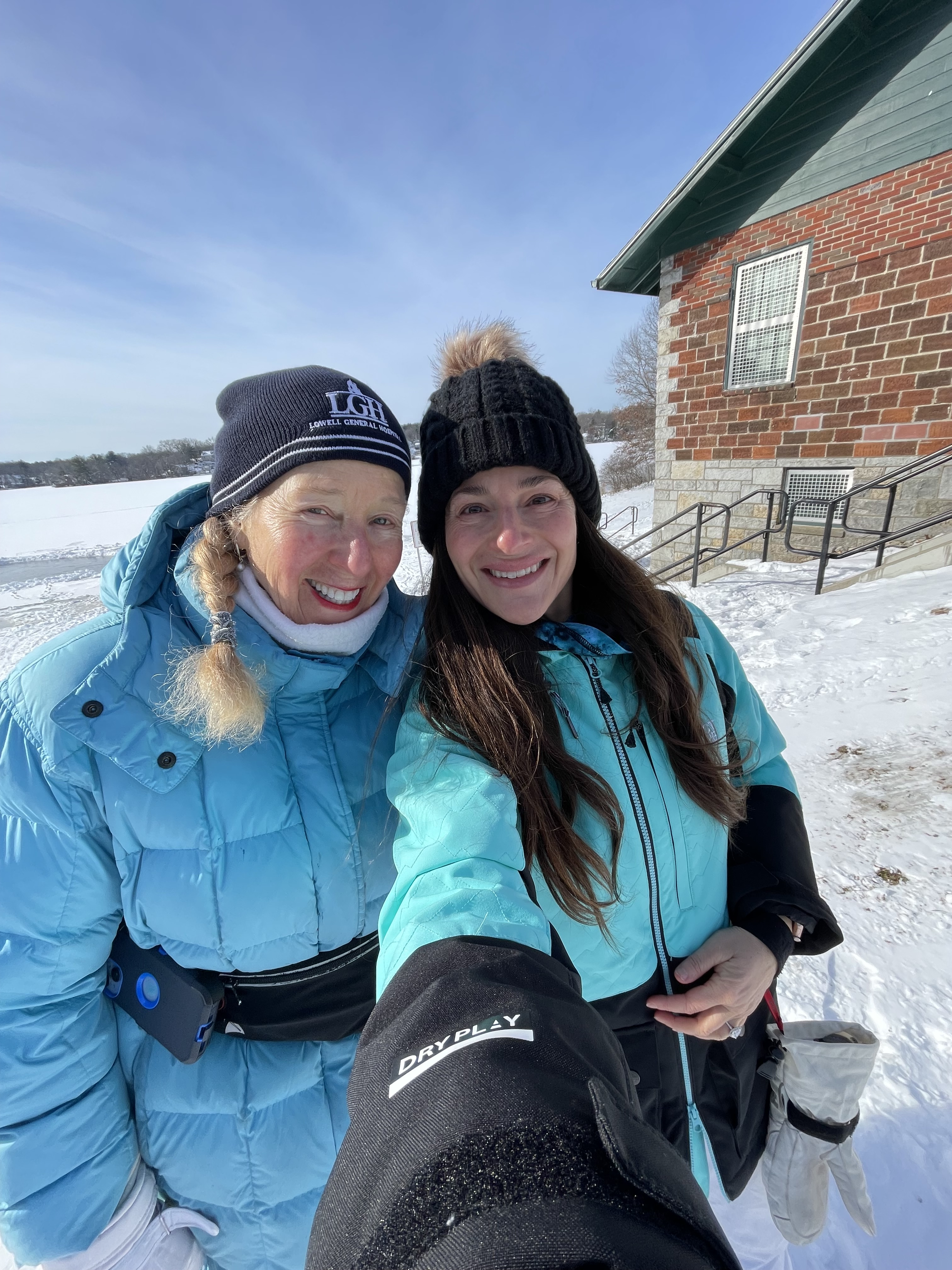
Fun fact: walking in cold weather gives you a boost of oxygen. The low temperatures compress the oxygen, so each breath delivers more. That’s what makes it so refreshing and gives your brain an extra kick. I love the freedom of enjoying the elements, as long as I’m dressed for it!

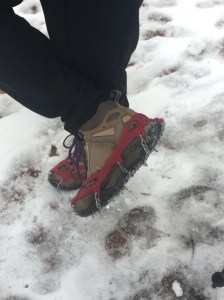
Gear includes warm hat, neckwear, gloves and on my boots the MicroSpikes are fabulous for walking, running or hiking on ice.

Lisa Wessan and Kim Vespucci, Freeman Lake, North Chelmsford, MA

There’s solid science behind the benefits of getting morning light in your eyes. (Panda, 2021). Natural sunlight early in the day helps set your body’s internal clock (circadian rhythm), boosting alertness, lifting your mood by increasing serotonin, sharpening focus, balancing sleep hormones like melatonin and cortisol, boosting energy, supporting metabolism, and strengthening your immune system—setting you up for a healthy, energized day and a restful night.

Hitting the gym for weight lifting, yoga, cardio, and all the other benefits is essential—but don’t forget to soak up some natural light in your eyes too; it’s a total game changer.

Good health is wealth, go for it💕

With warm blessings✨

Lisa

Reference:
Panda, S. (2021). The Circadian Code: Lose Weight, Supercharge Your Energy, and Transform Your Health from Morning to Midnight. Highbridge Audio and Blackstone Publishing.

Leave a comment »

What is the 4-week rolling enrollment period for Dialectical Behavior Therapy (DBT) skills training?

Dr. Marsha Linehan, founder of the DBT psychoeducation curriculum, understood that some people might miss trimester deadlines to start at the beginning of each semester. In classic non-binary, non-dualistic DBT fashion, it’s possible to be both late and on time at the same moment—what does that really mean?

Three times a year, several weeks before and during the Mindfulness Module, new students can join the ongoing DBT group to start at beginning of the next cycle.

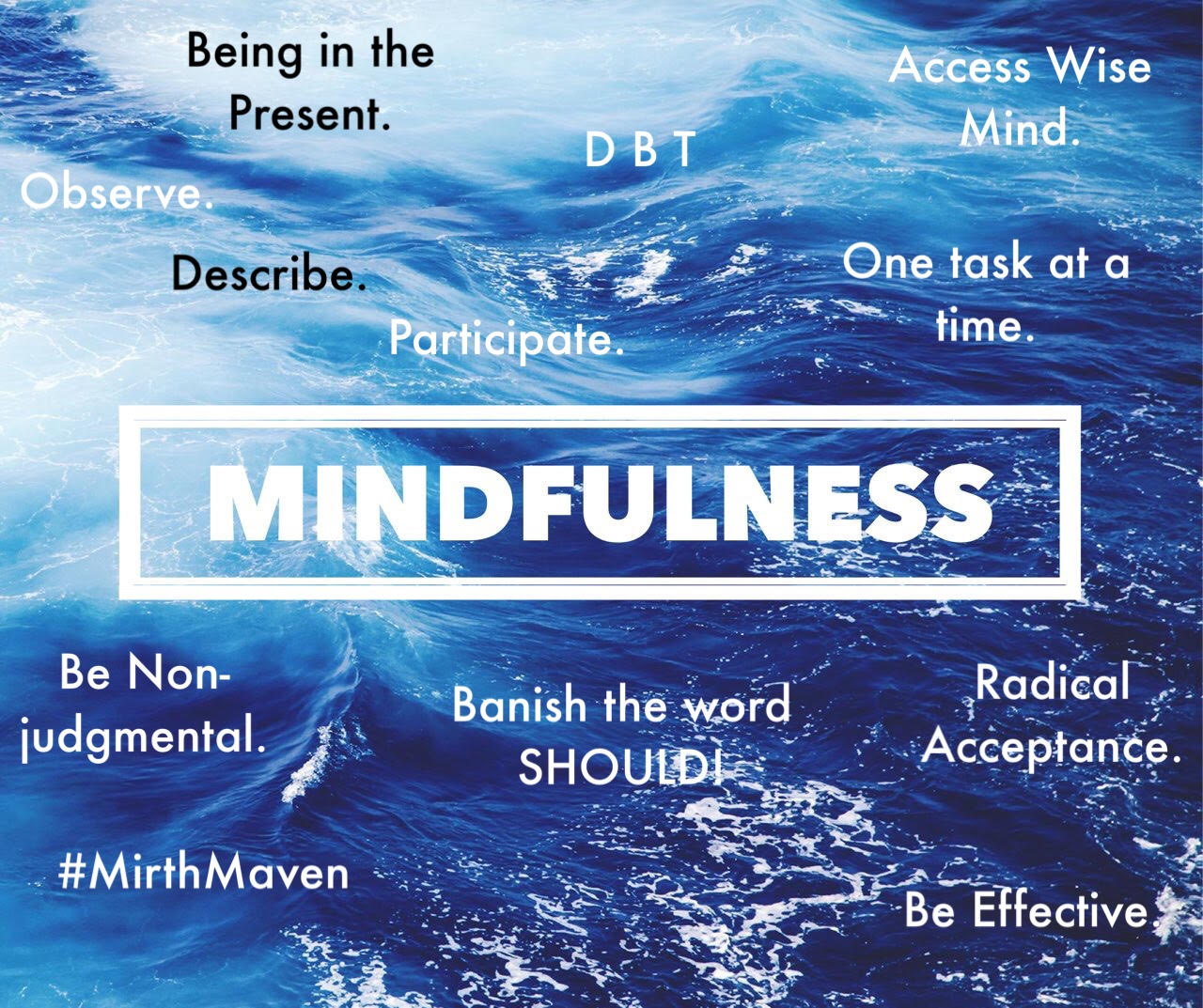
Here are a few of the main topics for the Mindfulness Module:

Good, better, best enrollment process?

Best is registering early, completing the intake session and forms in advance, and starting on Day 1.

Better is waiting until the last few weeks, the crunch time—and just managing to finish in time.

Good is joining after the class has begun, missing a week or two, but still getting involved. Continuing and then thriving thereafter. (When this happens, the new student pays a pro-rated fee for the group reflecting the missed sessions.)

If you or someone you know has been wanting to join this group but keeps missing the deadlines, there’s still a chance! The final cut-off for this semester is January 27. Once we finish the Mindfulness Module and begin the Interpersonal Effectiveness material, no new members will be able to join.

There are reasons behind all of this, and this is just the briefest summary! Ideally, all DBT students would register weeks before the class begins, making the experience much more relaxing for everyone involved.

If you or someone you know could benefit from this solution-focused, science-backed, and proven personal growth program, don’t wait to get started. My next Tuesday evening group meets from January 6 – April 7, 2026. You can learn more here: https://www.lisawessan.com/dialectical-behavioral-therapy

Onward and Upward✨

Lisa Wessan

Leave a comment »

David Pogue brings uplifting news from 2025 on Sunny Side Up segment

David Pogue ranks among my favorite journalists and polymaths. I first encountered his writing during his tenure as The New York Times’ weekly tech columnist from 2000 to 2013. He offered invaluable insights into email, technology, security, and much more. Since then, Pogue has enjoyed a vibrant and accomplished career, earning numerous accolades—including a Loeb Award for journalism, two Webby Awards, an honorary doctorate in music, and an Emmy for his exceptional work on CBS Sunday Morning.  

Since I started reading him on the New York Times, I have been recording the CBS Sunday Morning show to catch his segments. Here’s a recent clip from his 2025 good news review, which is a refreshing break from negative headlines. One highlight: a Boston based company can now make fully biodegradable plastics, reducing harmful plastic particles in our bodies. Watch here for more uplifting information:

It’s hard to avoid the tough headlines, but it’s important to balance them out with uplifting and inspiring news as well!

Good health is wealth, GO FOR IT!

With warm blessings✨

Lisa

Leave a comment »

Empower Yourself: Enhance Interpersonal Effectiveness and Reduce Social Anxiety

Take charge of your social interactions and personal growth with a 14-week Dialectical Behavior Therapy Skills Training Group (DBT). Learn effective strategies from expert Lisa Wessan to build confidence, set boundaries, and communicate assertively.

You can develop skills to set healthy boundaries, communicate clearly, and become resilient to others’ disapproval. Learning effective ways to interact can reduce social anxiety and enhance your success and relationships. You’ll also discover useful strategies for making requests and easing into small talk, such as discussing work, weather, or the weekend. By focusing on skill-building rather than willpower, you can foster more fulfilling social interactions.

Developing interpersonal effectiveness skills also involves investing time, effort, and resources. Many individuals choose to develop these skills when they seek change in their behavioral patterns. Sometimes your inner dialogue says “I am sick and tired of being sick and tired! I need to do SOMETHING to turn this around!” Research suggests that focusing attention on skill development leads to improvement in those areas, including social skills.

Neale Donald Walsch once wrote, “Life begins at the end of your comfort zone.” Yes, becoming comfortable with discomfort takes time and practice. By learning neuroscience-based skills, you can improve your ability to build new neural networks and succeed in mastering interpersonal skills.

Solution-Focused Therapy

The next virtual DBT Skills Group focused on Interpersonal Effectiveness and Mindfulness will run from September 30 to December 30, 2025. The course is taught by Lisa Wessan, LICSW, CLYL, RM, who trained directly with DBT founder Dr. Marsha M. Linehan and has over a decade of group facilitation experience. This 14-week program features weekly 90-minute sessions at $80 per week, providing participants with hands-on practice in social skills within small groups of 6-10.

To learn more, please visit https://www.lisawessan.com/dialectical-behavioral-therapy

🌀🌀 Register early for DBT groups, as enrollment involves several steps. Avoid waiting until the last week to sign up.

Onward and Upward✨

Lisa Wessan

Leave a comment »

Boost your interpersonal effectiveness in 14 weeks—DBT Skills Training begins 09/30/25

Dialectical Behavior Therapy (DBT) is a solution focused emotional intelligence curriculum that works!

For ten years, I have continued to be honored and delighted to work with my amazing DBT adult students (age 21+). We meet on Tuesday nights, 7:30 – 9 PM EST in the Zoom classroom.

Over the span of a year, you develop tactical and practical skills in Emotion Regulation, Distress Tolerance, Interpersonal Effectiveness, and Mindfulness.

FEE: New students pay $1420 for the first 14-week semester, which includes an individual intake session. The continuing students pay $1120.

GROUP SIZE:  Minimum 6, maximum 10.  

TOPIC: This semester you will study and practice Interpersonal Effectiveness & Mindfulness Skills.  

🌈🌈See  new DBT Flyer and learn more here:
 https://www.lisawessan.com/dialectical-behavioral-therapy

DEADLINE:
All registration forms, Intake Sessions
and fees must be completed
by September 29, 2025.

DBT Calendar:

September 30;
October 7, 14, 21, 28;
November 4, 11, 18, 25;
December 2, 9, 16, 23, 30 2025

Please forward this message to those who would benefit from this healing and empowering training. 

With gratitude,
Onward and Upward✨

Lisa Wessan

Leave a comment »

What are the seven attitudes of Mindfulness?

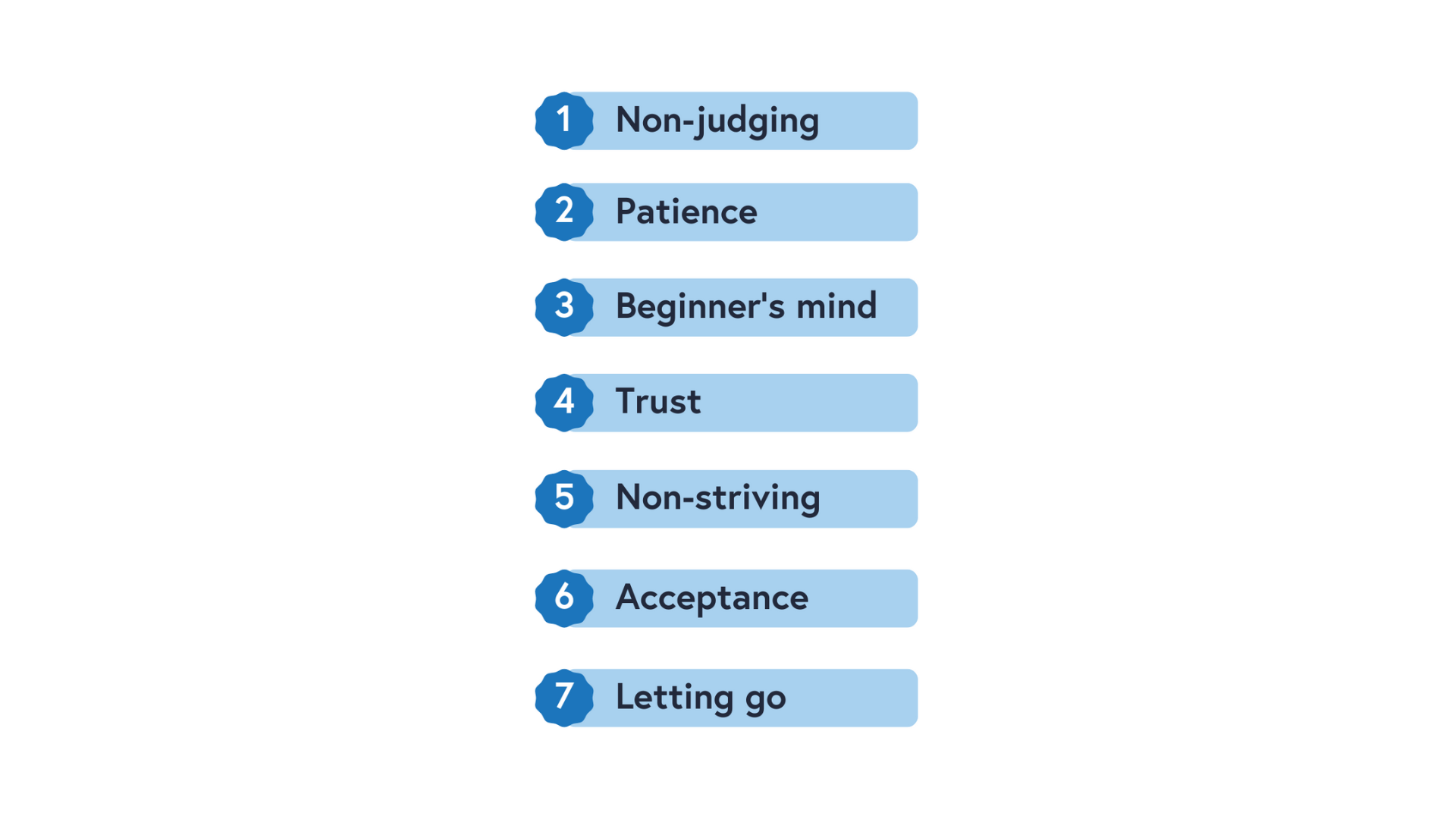
Mindfulness has grown into a significant industry with extensive literature on the subject. Among Western contributors to mindfulness, Jon Kabat-Zinn (1990) is one of our thought leaders on this topic. He outlined seven now classical attitudes of mindfulness. These attitudes are elaborated upon here, for your reflection and more insight.

  1. Non-Judging – Try to become aware of your mind as it judges and assesses things, situations, and people. With Dialectical Behavior Therapy (DBT), you learn to observe your judgmental thoughts while you are synthesizing your opposite beliefs. You might even count them to detach from them. Don’t stop yourself from being critical but instead observe yourself and thoughts without criticism. This will lead after some time to the realization that you are often functioning from a critical mode. This is not the healthiest point of view. Judging yourself (and others) causes stressful cortisol spikes, for every thought becomes a chemical reaction in your body.

  2. Patience – Healing takes time, so be patient with yourself and notice small progress. Join my Recovering Perfectionists club and embrace failing forward—growth comes from stepping out of your comfort zone and learning from mistakes.

  3. Beginner’s Mind – This is a mindset that is willing to see the world as a beginner and not as someone who has all the answers. Another way to express the Beginner’s Mind is the child’s point of view – you still have some wonder and a sense openness to new ideas. Learn to be curious, not furious, about your state of being. Let go of SHAME for not being perfect.  SHAME = SHOULD HAVE ALREADY MASTERED EVERYTHING.  Nay, Nay, you can be exactly where you are without any shame, perfectly imperfect.   You’re on your way. Yes, you are good enough, as is (and you could improve).

  4. Trust – Learn to trust your own ideas and feelings. You don’t need to defer to all the experts if something doesn’t ring true for you. Begin to know that your inner wisdom is best.  

  5. Non-Striving – Sometimes you don’t need to do anything – just be. Don’t try so hard to relax, thinking about ways to accomplish relaxation – watch how you feel when you stop striving. This includes letting go of your Compare and Despair, especially on social media. People typically post their “Happy Reel.” You don’t see the grimy, depressing, conflicted stuff they are dealing with privately.

  6. Acceptance – See things as they are; do you still need to lose weight? So be it. Are you still arguing with your spouse? Life gets LIFEY! Are you chronically constipated, depressed, exhausted? You’re taking action to move on. You don’t need to sugar-coat anything. This is how your life is and recognizing the reality of your life allows you to move forward and work on healing.

  7. Letting Go – You recognize that not all of your behaviors, thoughts and feelings have served you well. You need to make some changes in your life and that can happen when you accept your circumstance, then you will begin to make changes and let go of negative patterns. The paradox of letting go includes the 3 A’s: Awareness-Acceptance-Action.   During the Awareness phase, you are just waking up to your true reality, the beautiful and brutal truth of the life you are living. When you let go of your judgments and negative self-talk, you enter the Acceptance phase, and the healing begins. Before you know it, you are taking new actions and transforming your life.

References

Kabat-Zinn, J. (1990). Full catastrophe living: Using the wisdom of your body and mind to face stress, pain and illness. New York, NY: Delacorte.

Dialectical Behavior Therapy (DBT)

Leave a comment »

Enhancing DBT: Key Takeaways from Our Class

“The best part has been the content of the class. It is all so relevant! I like the way you have created an organized pathway through the workbook. DBT is truly not a “do it yourself” program. I very much appreciate the weekly page numbers for relevant handouts and worksheets. The structure you’ve created is one of the best parts of the class.  I love that each class includes guided meditation.” 
M.M., New York, NY

“I was slightly surprised that the DBT group tends to have several participants who are a bit reticent. Group dynamics are always unpredictable. I thought the participants would be much more dramatic and self-aggrandizing. I expected them to be aggressively talkative or domineering. I also thought Lisa would have had to be very hands-on in managing that. Instead, the group is rather quiet, and everyone seems so delightfully ordinary. It’s been a relief, frankly. I’m not a weirdo for having intense emotions and struggling to manage them. I’m just an ordinary person and so are the other group members.  I also didn’t expect so much humor. Your sense of humor has been quite welcome. It adds levity and makes the class feel less burdensome or “heavy.” C.S.E., Cambridge, MA

Up next: Virtual DBT Distress Tolerance and Mindfulness Skills, June 10 – September 9, 2025. Tuesdays, 7:30 – 9 PM EST. There are still a few spots open. To learn more, visit Summer DBT Group.

Good health is wealth, go for it💙

Leave a comment »

UP NEXT: Dialectical Behavior Therapy Skills training (DBT) on Mindfulness & Distress Tolerance, May – August 2023 on Zoom

Serenity is not freedom from the storm, but peace amidst the storm…

Hi, 

Thank you for your continued interest in my work. I know I haven’t posted frequently enough here – but that will change soon!

For today, I’m excited to be teaching the next 14-week semester of Dialectical Behavior Therapy Skills (DBT).  This semester we will cover Mindfulness & Distress Tolerance Skills.

🌀 Click here for the current  DBT FLYER. 

With the Distress Tolerance curriculum, your will learn valuable skills and interventions to help yourself reduce your intense stress and harsh feelings in the moment – to lower the volume on your anticipatory anxiety and catastrophic thinking. These DBT skills significantly help to reduce the escalation of your inflammatory emotions, and reduce the painful, polarized and perfectionist thinking that often cause your meltdowns. You will learn to find your peaceful “Middle Path” here. 

There are many powerful skills included in this semester’s work. It is the hope of this process that you will put together your own personal Distress Tolerance tool kit with the techniques that work the best for you.

Unfortunately, there is no “one size fits all” with these various techniques, so you do need to be a good scientist in the laboratory of your life and try them all out.  You will eventually find the ones that you love, and that will work quickly and effectively for you. 

Yes, I am looking forward to continuing this exciting journey towards wholeness with this next group.  I am also deeply honored to be sharing this transformative and useful educational process with you.

If this is not for you, but you have someone in mind for this next DBT Group, please have them contact me soon at my web site – currently www.MirthMaven.com – and fill out the Contact Form which helps them briefly tell me the best times to reach them (by phone) and guides them to check out their insurance (for the Out of Network benefit).  Otherwise this course is private pay, $980 for continuing students, $1215 for new students (includes one Intake session.)  

Onward and Upward✨

Lisa Wessan

“If you can recognize and accept your pain
without running away from it,
you will discover that although pain is there,
joy can also be there at the same time.”

~ Thich Nhat Hanh, No Mud, No Lotus


Lisa Wessan, LICSW, CLYL, RM
Psychotherapist, Dialectical Behavior Therapy Skills Trainer (DBT)
Life Coach, Author, Speaker, Consultant

www.MirthMaven.com
🌀✨🌀✨🌀✨🌀

1 Comment »

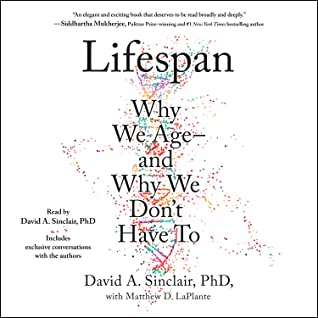
LIFESPAN: Why We Age, and Why We Don’t Have To, by David Sinclair, PhD

Video Comment: (3 min) https://youtu.be/pGSuysVYo2Y

FUN FACT: “The number of centenarians – people in their 100s – is soaring worldwide as life spans continue to grow. In 1990, there were about 95,000 centenarians, but by 2015 there were 450,000, according to United Nations estimates.  By 2100, the U.N. projects, there will be 25 million.” – THE NEW YORK TIMES [quoted in THE WEEK, 14 MAY 2021, p. 16]

To that end, here is my review of LIFESPAN: WHY WE AGE, AND WHY WE DON’T HAVE TO, by David Sinclair, PhD (2019, Simon and Shuster: New York):

“Aging is a disease…and it is the Mother of all diseases, the one we all suffer from.” David Sinclair has evidence that there is a cure for aging. This is the basic hypothesis of this work.

The good news: fresh from the labs of Harvard, MIT and many other top research institutes around the world, Sinclair shares the very exciting and hopeful reports which indicate that our life expectancy is about to grow — the average person will live to 150 years soon, and possibly much longer…

The less good news: there is quite a bit of resistance and kickback to this longevity work which creates research funding issues. People have economic, philosophical, religious and ethical issues about longevity. Tampering with our genes, reversing cell damage, increasing strength and brain function results in an increased life expectancy.

The first part of this book is highly technical – Sinclair enthusiastically deconstructs his research and his peers’ work on gene editing and other relevant experiments.

Approximately the middle third of this book is about longevity techniques, treatments, prevention, and ways to stay healthy. We learn more about intermittent fasting, cold plunges, dietary suggestions, and possibly useful supplements (surprisingly few). There is no true “Magic Bullet” here. Yet.

The last third of the book explores the implications of increased longevity, and how it will affect our culture (and Social Security questions). Sinclair successfully resolves dozens of serious conflicts and considerations that have been thrown at him – and this part was both interesting and annoying at times. The worst case scenarios are all addressed with positive extrapolations for the mutual benefit of all humans – so there is no reason not to send billions of dollars to these researchers to unlock the secret code to aging successfully.

I hope one or more of our billionaires get word of this book and send over a few billion dollars to Sinclair and his buddies so they can finally nail down the aging disease and, dare I say it, CURE AGING!

It was frustrating to learn here how people’s ignorance and fears block the funding for this work! Basically, if Sinclair and his tribe can slow down and even reverse aging, they will also be eliminating cancer, heart disease, diabetes and more chronic diseases which all arise from the aging process.

I agree with Sinclair, this is NOT a moral or ethical issue. Increasing our longevity is part of our natural evolution and is a natural next step.

IN SUM, there is a solution to aging, and when we find it, it will help our species and benefit all of mankind in amazing ways.

On a personal note, I have been affirming that I am going to be a Super Centenarian (110+) for decades already…so now, I’m correcting that and plan to live to at least 150 years or longer. I always knew I was going to peak in my 60s…so I’m not even halfway through this awesome adventure in living!

Sinclair has inspired me to ramp up my longevity activities – the one thing I have resisted is the cold plunge (the Wim Hof method). I’ve been aware of Wim Hof’s works for years – so for a while I was going to a cryotherapy tank every week and taking the cold plunge inside of -260 F tank for 3 minutes. That was very useful and I loved it.  

In addition, my teacher Tim Ferriss has discussed and explored this work on his podcast to the point where I feel like a fool for not doing it regularly. (Ferriss takes ice baths regularly). My version of the Wim Hof method is to walk outside in cold weather wearing a light coat or vest and NOT bundling up all the way. (I wear a hat, scarf and gloves to avoid frostbite.)

So I’m excited about the possibility of living WELL at 150+ years of life, and to empower others to do the same. Yes, it’s the TEAM WORK that makes the DREAM WORK!

May we all age well together🌟

Leave a comment »