Yesterday I attended a new yoga class at my gym, titled “Breathe, Feel and Flow,” not particularly daunting. Rumor had it that Ravi is a challenging teacher. I found myself feeling excited and curious to see how this class would go. My fear factor was low, because over the years I have become adept at yoga “Modifications.”
For those who are not familiar with yoga practice, a Modification is doing your Plan B for a posture that you can’t do. Plan B can be derivative of the ideal posture, or something completely different. As a recovering perfectionist, many years ago Plan B would feel uncomfortable and even shameful, as my inner self talk would say “Why can’t I do this? What’s wrong with me?” or “If only I weren’t so big, I hate my body!” or “What’s the use, why bother? FORGET YOGA!”
During Ravi’s class, he introduced several different Binds (complicated twists), and then, for a grand finale, a Bird of Paradise! Instead of feeling defeated and ashamed, I started laughing! First, I was grateful I could do at least 80% of the postures. Second, I was delighted to first see that my mindset was so clear – I was not upset to be pushed to this hard edge. Instead I felt inspired! Now I have a new goal. The Bird of Paradise is so beautiful, even sculptural (see photo below). I was elated to think that someday I will gain the mastery to do this position too. I laughed at the absurdity of me thinking I could learn that position and do it the same day. This will probably take months or years of practice.
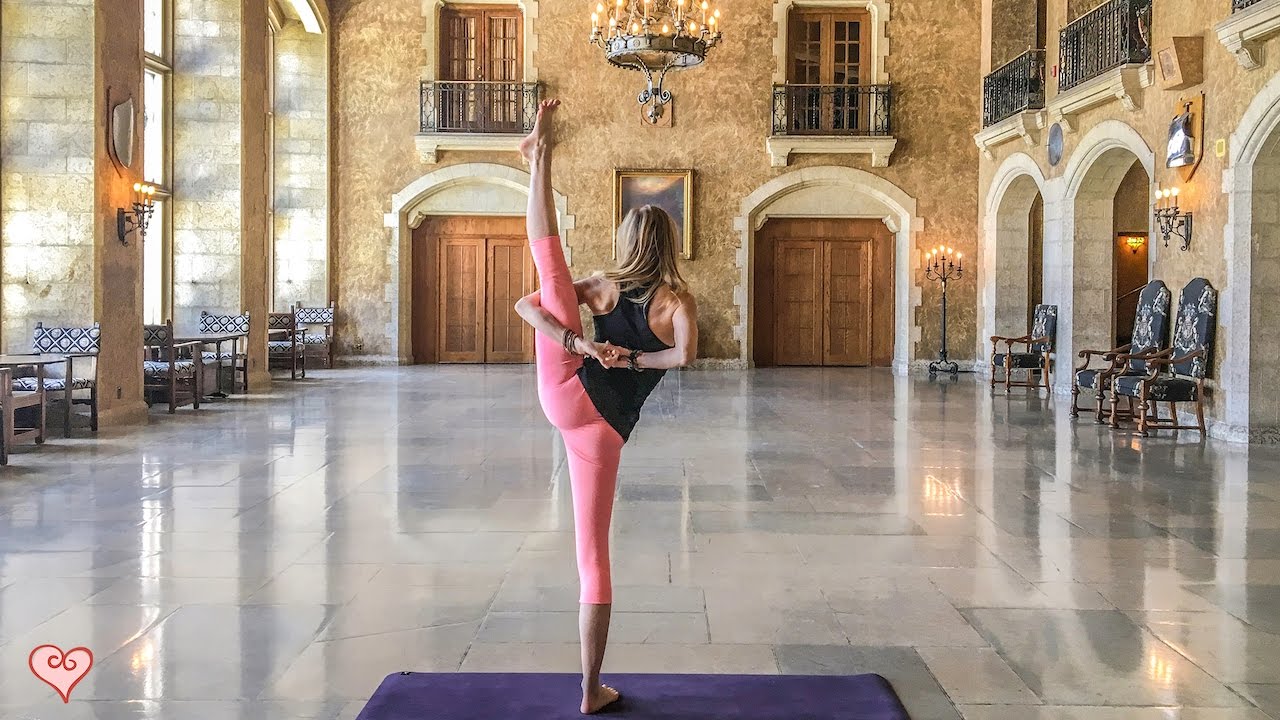
As Neale Donald Walsch has taught me, “Life begins at the end of your comfort zone.” Yes, I love being able to embrace being out of my comfort zone and feeling exhilarated vs. sad or ashamed. That is true personal growth. This healthier mindset is also the result of practicing years of dialectical thinking, self-compassion and radical acceptance.
Dialectical thinking upgrade: I can be skillful and a beginner at the same time. I can be excited and also humbled by yoga. I can be super flexible and able to do so much, yet I cannot do it all. Progress not Perfection!
Self-Compassion: I’m doing the best I can. Each day, with practice, I can improve and get better. Look how far you’ve come! Plan B is good enough. I am content with being a good enough yoga student!
Radical Acceptance: My current anatomy and musculature is what it is. I cannot force muscles and bones to move differently. I can’t change Ravi’s class outline, it is what it is. I will embrace the whole class and enjoy the postures that I can do, and make good modifications for those I cannot do.
BONUS! After the class, I was told by several yoga students that my laughter made them feel more accepting of their inability to do these harder positions and just create more meaningful modifications during that time. My laughter also helped them diffuse their discomfort or shame in not being able to do the Bird of Paradise…As it happens, I am a Certified Laughter Yoga instructor, so it was deeply validating and uplifting for me to share a tiny slice of that practice during this yoga class. Learning to embrace the paradoxes and absurdities of your life – rather than be a victim of them — can be so relaxing and freeing.
This is part of my clinical practice as well, although I don’t formally set up therapeutic laughter sessions for individual work, it just happens organically in the moment. (Laughter Therapy programs and groups are planned ahead and are available upon request.)
For this week, see how you can participate in life by going out of your comfort zone in some way. Yes, living on that razor’s edge between fear and excitement is where the thrills of life will delight and amaze you, and give you a life worth living!

 The Lighter Side of Transformation