There’s a lot to be grateful for this season, and I’m grateful for the never ending Light that goes to any length to reach us…
I appreciate this verse from Leonard Cohen, that when you are having a breakdown , aka cracking up, you are actually have a breakthrough. Those cracks allow us to grow, learn and transform.
No cracks, no wisdom. It’s all part of the mysterious dialectical personal growth process we engage in as living beings. We are not aiming for perfection, but we are aiming for wholeness.
I hope this message finds you in good health, moving towards wholeness, having more breakthroughs than breakdowns!
Happy, healthy, spirit of Thanksgiving and holiday season,
Open Enrollment Period for Adult DBT Skills Group ends 1/3/19. This next semester we cover Mindfulness and Interpersonal Effectiveness. Learn more HERE.
For some people, the holidays are a very joyful and exciting time of year. More parties, celebrations, shopping and gift exchanges coupled with lots of social stimulation. It’s all good…for them.
But for others, who feel painful pressure to have “forced fun” and may not have strong intimate connections, lack financial resources, struggle with illness or addiction, these times are fraught with deep loneliness and uncomfortable feelings of “Compare and Despair” (Wessan, 2011). For this group, we are entering “The Red Zone.”
The Red Zone runs through Thanksgiving, Christmas and New Year’s Eve…and perhaps for many Valentine’s Day is also included in this over stimulating, emotionally charged, addiction riddled time of year.
When I was younger, single and living alone in New York City, I experienced the holidays as my Red Zone. I loved my circle of friends, but many of them were married or had moved far away. They were not available for the holidays. I found my loneliness was most acute during this time of year.
As part of my coping with loneliness, for many years I went away for New Year’s weekend to Pumpkin Hollow Retreat Center, in Craryville, NY. Pumpkin Hollow is a beautiful place, with magical trails on lush Berkshire hills and a thoughtful and sensitive staff. They used to facilitate a wonderful Silent Retreat over New Year’s weekend (I noticed now they have one in late January and May).
There were moonlit walks in the woods, we ate delicious gourmet organic vegetarian meals , danced around a huge campfire, hugged trees and meditated together in the silence. The facilitators artfully helped us work through all the activities in silence, and I remember every year being amazed at how little language I really needed to get by and still feel peaceful and content.
For me, it was a relaxing and restorative weekend in the Berkshires, but I also I had to process some difficult feelings.
Forgiveness 101
Being in the Silence can be a powerful cleanse, as so many distractions are removed. The Silence gives us time to deeply work through some acceptance and forgiveness issues, serving as a “Mental Laxative,” as Iyanla Vanzant is known to say (Vanzant, 2013). This is a perfect time to take a moral inventory of ourselves, and notice where we need to improve.
Moral inventories vary, but at their core, we make a list of the people we have harmed, consciously or unconsciously. Then we make a list of the ways we hurt ourselves, consciously or unconsciously. Finally, we make a list of our fears and regrets. (The only way to do a moral inventory wrong is to not do it at all.)
All of this then requires a deep and thorough forgiveness practice, ultimately letting go of all of it. Then it is done. We have a fresh start.
You can use this Forgiveness Prayer to help you get started. Practice Suggestion: Read it into your Smart Phone’s Voice Memo app (or tape recorder) very slowly. Pause 5-10 seconds between each line. Save it, and then play it back to yourself with your eyes closed, allowing yourself to feel it deeply. As faces and names to forgive bubble up in your consciousness, you can make a note of them to add to your lists.
For all those we have harmed, knowingly or unknowingly, we are truly sorry. Forgive us and set us free. For all those who have harmed us, knowingly or unknowingly, we forgive them and we set them free. And for the harm we have done to ourselves, knowingly or unknowingly, we are truly sorry. We forgive ourselves and we set ourselves free. ~ Author Unknown ~
Afterwards, we may also need to talk to a few people and apologize for our behavior (or in some cases neglect). Hard Fact: In order to really feel healthy, whole, clean and strong inside, it is essential to give our inner emotional pipes a good Roto-Rooter cleaning by resolving any awkward or tender hurts. Apologies and amends need to be in the process. Fun Fact: Asking for forgiveness is the final piece in our quest for inner calm, or should I say, the Final Peace?!!
But you don’t have to go away for a whole weekend to give yourself an effective Mental Laxative…you can carve out some time each day, or each week, to sit quietly and review your life to forgive the imperfect moments. What worked well? What did not go so well? Whom did you judge too harshly? Even taking a brief inventory of your emotional interior will have huge pay offs in the long run.
One more Mental Laxative Practice Suggestion: set a timer for 10 minutes. Do as much of your list making as you can in that time, and then stop. It will be enough. Do this on a weekly basis, or more frequently if you are ready. Ten minutes of taking a Mental Laxative twice a week is a great beginning, perhaps once over the weekend and once during the week? Do what feels right for you.
As you progress, this could ideally become a daily activity…and who would you be if you had no resentments, anger, unresolved grief and rage? You would bloom on in a whole new way.
In addition, I believe that holding onto negative thoughts and unresolved anger, resentment, fear and grief will fester within, and eventually manifest into some kind of physical illness and/or mood disorder. We need to keep all of our pipes clean! Digestive pipes and emotional pipes, which actually work together in the big picture.
As the hallowed halls of the Mindfulness research and Functional Medicine have taught us, every thought becomes a chemical reaction in our bodies. Please note, the Mind-Body connection is not philosophical, theoretical or conjectured. It is grounded in science (Turner, 2014).
We need to be aware of this and carve out the time to release and let go of our negative and stinking thinking. If we don’t, it will just putrefy within, and poison our relationships as well.
What is Reflective Listening?
Being heard is so close to being loved, that for the average person they are almost indistinguishable. – David Augsburger
Another worthwhile activity to do if you find yourself being in the Red Zone now is to volunteer your time, talent and special treasure in places that will appreciate you.
Before I became a therapist, I used to volunteer at a Suicide Hotline called HELPLINE, at the Marble Collegiate Church in New York, which for me, was an exhilarating service. It was founded by the late, great Reverend Norman Vincent Peale, may he rest in peace. (There is also an excellent Blanton-Peale counseling center located at Marble, with wonderful psychospiritual therapists on staff, see reference below).
Most Hotlines have a fascinating and useful training program which enhances all human relationships. I first learned the power of Reflective Listening in my 10-week HELPLINE training, and it transformed my life.
Reflective Listening is being able to let someone else talk and just be present for them, listening quietly. When they pause, then you reflect back the essence of what they have just said. This feels very soothing and loving to the agitated talker. The person feels so validated by your Reflective Listening, it is often enough to help them get “off the ledge.” Listening is a form of loving each other that soothes, heals and restores us.
Learning Reflective Listening was the bulk of my HELPLINE training, plus there was also a lot to learn about making referrals and gaining trust.
Coming from a culture of chronic interrupters and non-listeners, I had learned some ineffective communication habits over the years, which I continue to strive to improve. The impulse to speak out and interrupt is fierce, but knowing that it compromises relationships and hurts people helps me to zip my lip, as best as I can. For today, I remain a humble work in progress, that’s for sure.
My hope for the future is that the Hotline’s training program is something that will be taught to all humans by the sixth grade. Similar to the skills learned in Dialectical Behavior Therapy (DBT, which should also be part of elementary school education) during training we learned about interpersonal effectiveness, mindfulness, distress tolerance and emotion regulation. These skills give us the foundation for better emotional balance, and allow us to be more present for others’ pain and suffering, as well as our own.
Ask yourself the magical question, “How can I be useful today?”
I understand that a Hotline gig may not be your cup of tea. Volunteering at a soup kitchen, animal shelter, nursing home, botanical garden, museum, Indivisible, MoveOn or anywhere can also be very uplifting during the Red Zone.
Nursing homes always need a river of volunteers to help with feeding, reading, translation services and transporting non-ambulatory residents . I learned this when I was in graduate school, as one of my internships was at the Jewish Home and Hospital for the Aged in the Bronx. I was facilitating several therapy groups each week, but there was a huge volunteer staff that coordinated all these helpful tasks for the residents. I was so impressed with the volunteers’ compassion and zeal to help these nursing home residents.
Yes, there is a time for self care, and then sometimes it is better to focus on others’ needs more than your own, to take a break from the painful ME-ME-ME inner dialogue you might be having.
Transparency is Healing
Finally, being in the Red Zone totally in secret is just exhausting and no fun. Be honest and authentic about your feelings — transparency is healing — and see who matches your energy. You might find a few people who also feel put upon and even hate the holidays — great — these will be your Red Zone buddies and comrades in getting through the muck of the season.
Make it a point, however, to be victorious together, e.g.”let’s stay sober and clean through this nightmare,” or “This too shall pass. How can we be useful today?” or “Let’s go for a hike and get away from the shopping madness.” Complaining is draining, so it’s important to find ways to support each other to rise above the chaos of the season.
Being able to laugh about it, the complete absurdity and paradox of Christmas especially, is so refreshing. Whenever I see huge displays of gifts and glittery objects everywhere tempting us to buy-buy-buy, I chuckle to myself and think “What would Jesus say about all this? Would He be happy with this display?” Yikes.
I’m not judging, nay, nay, I actually love the glittery Hand of G-d in all of this (Wessan, 2012). But you know the commercialization of Christmas becomes excessive and downright irritating at times — so I like to take a step back and think about the real reason for the season…our awesome connectivity, celebrating our Oneness, and the mystery of the Numinous in our lives.
Another reason is the magnitude of working through the bittersweet feelings of existence together and being brave enough to peacefully co-exist in this tumultuous world. We can acknowledge the dialectical paradox, that sometimes we want to live and sometimes we don’t, but we choose life anyway. We need to be courageous during this time, knowing that we are struggling in the Red Zone while “everyone else” seems to be having the best time ever.
In Conclusion
For this holiday season, The Red Zone, I encourage you to try something different:
Experiment with a daily or weekly Mental Laxative experience, or go away on a retreat for more in depth forgiveness work.
Volunteer somewhere that will give you a chance to focus on someone else, take a break from “Poor me, Poor Me, Pour me a drink” thinking.
Give honesty a chance, come clean and tell a few people how you really feel. Defrost some of that hidden grief, rage, loss, loneliness, “Compare and Despair” and all the inner stressful thinking that puts a damper on your days.
I promise if you follow some of these suggestions you will feel lighter, brighter and perhaps, dare I say it, even more peaceful during this relentless Red Zone.
Good health is wealth, go for it!
References
Dialectical Behavior Therapy Skills (DBT). This is a four part psychoeducation program that covers Mindfulness, Emotion Regulation, Distress Tolerance and Interpersonal Effectiveness. It takes one year to complete the curriculum.
Turner, K. (2014). Radical Remission: Surviving Cancer Against All Odds. New York: Harper Collins.
Vanzant, I. (2013). Forgiveness: 21 Days to Forgive Everyone for Everything. Carlsbad, CA: Smiley Books.
Blanton-Peale Institute and CounselingCenter, New York, NY, for individual, family and couples counseling. Accepts most insurance. Highly recommended for quality psychospiritual therapy. Founder: the late great Reverend Norman Vincent Peale.
Pumpkin Hollow Retreat Center, Craryville, NY. Owned and operated by the Theosophical Society. Organic vegetarian food served from their own farm, non-dogmatic, beautiful retreat center. Highly recommend, especially the retreats on Therapeutic Touch, and the Silent Retreat.
Even if you don’t have a chemical addiction (Alcohol, Pills, Sugar, Flour, Dairy, Cigarettes etc), you might be addicted to crises, drama, or intense emotions that put you center stage.
You could even be addicted to isolation, anger, hatred, “Compare and Despair” and other emotional states…it’s universal. Ideally, no one would feel shame about their impulse issue, and more than half the battle is naming and releasing the shame around these issues. “If you can name it, you can tame it!”is one of the most hopeful slogans of my guild. We are all striving to grow, learn and heal from whatever ails us.
In my Westford, MA, DBT Skills Group (Dialectical Behavior Therapy), we recently explored addiction models, including Total Abstinence, Harm Reduction and Dialectical Abstinence.
Total Abstinence is useful when you have tried 1000x or more to practice Moderation Management but it failed. Moderation Management has you set a boundary or limit to what you can do before you are at risk. For example, if you have a challenge with alcohol, saying “Two drinks per evening, and no more than twice a week.” If you consistently zoom past that limit then Moderation Management has failed, and you cannot get well with that system.
Complete abstinence is usually for those who know that “One cookie is not enough, and a thousand are too many. ” For those people who cannot enjoy one or two cookies, for whom the desire to keep going will override all rational thought, complete abstinence from cookies is the easier, softer way. You make the decision once and for all, and then keep surrendering to it because you know it is less painful than the alternative inner haggling dialog on whether to indulge “this time” or not.
So when moderation is impossible…then you know. Usually you cannot skip straight into to total abstinence…most of us do the hokey pokey for a while with Moderation Management before we surrender. Fun fact: The whole journey is necessary for your inner process to be complete.
Dialectical Abstinence is a middle path for those who cannot, or will not, practice total abstinence from their substance abuse, or addictive behavior, yet ultimately desire total abstinence. Yes, it’s the perfect paradox, “I want to abstain, but I won’t right now.” Moderation Management and Harm Reduction are applied here to manage your addiction and prevent a complete relapse.
Harm Reduction is allowing for a thought system to be flexible enough so that if someone has one drink, or one cookie, they don’t say, “Oh what’s the use, why bother, I might as well go all the way and finish the bottle (or box of cookies)!” Harm reduction takes you out of the dualistic, all or nothing, black and white thinking so that you might have three cookies and then say, “Ok, that exceeded my limit, but I’m going to stop right here. It’s good enough for today.”
As my old beloved professor Christopher Lasch at the University of Rochester once said “We live in a culture of addiction.” Lasch was fairly well known for his book on The Culture of Narcissism: American Life in an Age of Diminishing Expectations (1979), but he had a deep belief that the rise in our addictive culture was correlated to our self-absorbed lifestyles.
So much of our need to medicate ourselves or have a Pity Party for ourselves is tied into our “Me-Me-Me” anxiety and fear. Clearly there is no simple altruistic solution for our multidimensional addictions. The research and science on this vast topic has repeatedly shown that when we do aim to give service and get out of our heads for a while we can find some relief and peace when focusing on fulfilling others’ needs.
And yet, if you are obsessed with others’ well being and are codependent, then you have another kind of addiction…which requires detaching and letting go of others’ business! Oh my, it’s a slippery slope in the land of addiction!
I find with my DBT students that many of them are recovering Drama Queens and Kings. Before they started this healing process, they were often embroiled in wildly high risk and/or debilitating situations. Once they realize that they do have an addiction to Drama, they start letting go of the the need to be center stage, stirring the pot and getting everyone around them wound up. But it requires a process of compounded skill building, education, homework and practice, and re-wiring their brains in order to shift from the “Poor Me” narrative to the “Serene Me” experience.
When someone says, “Poor me, poor me, pour me a drink!” they are stuck in Victim Consciousness and do not see how many choices and options they have. Slowly, slowly, with DBT training, rehab treatment, or 12 Step processes they start to see how many other options they have besides using their addiction to cope.
We live in a time where treatment for addiction and mood disorder is available, and the only way to do recovery wrong is to not do it at all. So if you or a loved one are struggling with something along the addiction spectrum, trust that there is a solution for you. As the Dalai Lama says, “Never Give Up!”
As I am continuing my ongoing birthday celebration (from 4/21), yesterday a dear friend took me to see Amy Schumer’s new film, I FEEL PRETTY, which I loved. Thank you Amy Schumer for being so brave, vulnerable, transparent and still zany and hilariously funny. Yes, you are the carrots in the brownies…(as you shared on Oprah’s SuperSoul Sunday podcast recently). So great to laugh at the absurdities and incongruities of our plump biosacks that carry us around here at Earth School. I FEEL PRETTY is clearly part of the required curriculum for the Liberation Philosophy for Plump People!
Brief back story…
This is how the day went…first I had a long overdue haircut at noon — and my new hairdresser, Chloe, did an amazing job! I left her salon feeling extremely pretty. I even had a few tears in my chair, because my hair has been in a side-braid more often than down on my shoulders for a long time.
Here is a recent braid photo from last Sunday at the Lyric Stage Theater in Boston, MA, chatting with Eugene O’Neill after his play, Anna Christie…
Why the hair neglect? Am I too busy? Not caring? Rushing from exercise to office, no time to fuss? Apathy? Whatever. I like my braid, but I have gotten some negative feedback from my sister that it is not flattering. I wear it anyway. I know my hair looks nice when it’s down, but some days I am not able to get that together.
In Chloe’s salon chair, my tears told me that I missed that part of myself, feeling beautiful and glamorous, and desirable. I hadn’t felt this way for quite some time it seems. I usually feel moderately acceptable, clean and neat, and I know I look ok, but this haircut took it up more than few notches…from acceptable to awesome!
Then while I was feeling soooo pretty, I’m watching Schumer’s new film, I FEEL PRETTY, and I had a surprisingly major transformational experience! (similar to Amy’s character in the movie, but not as dramatic. Will not spoil the story for you, just go see it!)
I suddenly get how my attitude and Belief System (B.S.) rule my mood, energy, and activation of this phenomenon of “feeling pretty.” My BS determines my interpersonal effectiveness, distress tolerance and ambition. My BS can launch me into the heights of joy and super success or drive me down a slippery slope of negative thinking and despair. For today, I have the skills to reign myself in, but the roller coaster ride of negative BS can be a huge distraction and wasteful of my time and energy.
What are the odds? Coincidence? Or is the Universe conspiring to turn me the hell around? Pretty haircut, followed by seeing the movie I FEEL PRETTY, and then a new neural network explodes in my brain…it’s a G-d Job, for sure! Best birthday gift du jour…and I know more are coming!
Yes, I get it, I am an irresistible magnet for good people, places, things to come into my life. My energy is sheer deliciousness and I want to be with people who celebrate me, not just tolerate me…in my plus-sized body. This is just a fantastic news breaker! I FEEL PRETTY! YES! Full throttle, all 12 cylinders pretty. A masterpiece of creation. Much needed, part of the beautiful landscape.
Remember, each day is a new beginning, as it is written in Winnie the Pooh:
“What day is it ?” asked Pooh.
“It’s today,” squeaked Piglet.
“My favourite day,” said Pooh.
Some days may appear to be more special than others, but in fact each day is a special pearl of a day. Let’s love the day, no matter what…experiment in feeling an attitude of gratitude for each breath you take.
Since I changed careers in 1999, morphing from science journalist to therapist, I feel as if I have given birth to three clinical children in this journey…
First, I delivered Therapeutic Laughter for Caregivers (and others) in New York City, which emerged as keynotes, workshops and seminars. I still enjoy presenting these programs which also include Team Building with Laughter, the Let Go and Lighten Up program and LaughAnanda (laughter meditation). Each program serves a different sector, for corporate, medical/healthcare, educational, non-profit, and spiritual organizations.
Second, after a long gestational study period, I delivered Dialectical Behavior Therapy Skills Groups (DBT) two years ago and currently facilitate two DBT groups in my office in Westford, MA, one daytime and evening group.
Third, and brand new as of June 2017, Walk and Talk Therapy (WATT) was born. I am very excited about the progress and results my clients are experiencing during WATT.
Over the past several years, every time I read about exercising with clients, I was more intrigued…yes, there is solid science and empirically verified research on the benefits of WATT.
In brief, the motion of walking stimulates the bicameral brain and increases activity between the left and right hemispheres. This allows people to access more complex feelings and memories, and have the ability to process the sadness, grief or trauma even more effectively while walking. While walking, everything is flowing, and the negative or heavily charged energy from the traumatic memories can discharge quicker. (I’m in the process of writing an article on a few of my clients who have had dramatic shifts and turnarounds on these walks.)
RISK MANAGEMENT
I have my clients sign an Indemnity Agreement prior to the WATT, and we discuss the possible challenges that may occur, such as tripping on a rock, or falling for some reason. For some, this often leads to a lively discussion of their previous adventures and how confident they are in their walking ability. “Walking around a lake? This is nothing, a piece of cake!” they say. For others, the prospect of walking for two miles is daunting, but they understand they can do as much or little of the walk as they want. We have a choice of several benches for resting along the way with stunning views of the lake.
If you are considering WATT, I strongly recommend it. As the Scottish-American naturalist John Muir once said, “In every walk with nature one receives far more than he seeks.”
This goal of this article is to provide insight into the “back office” of behavioral health care practitioners, especially for our patients, and the administrators who work with us.
Even though I tell new patients that they need to allow for some “wiggle room” at the top of their session and at the end of their 45-50 minute therapeutic hour, there are always some who are hurt and upset when I am not perfectly punctual, and that would be for anywhere from five to 10 minutes. I am writing this article for them… and my fellow behavioral health care practitioners, who may appreciate this illustration of what goes on while our patients are waiting for us.
One factor to keep in mind is that there are many different opinions on the “therapeutic hour.” Most insurance companies reimburse for a 45 minute session, a unit of time that they deem is appropriate for treatment. There is an ongoing debate on this matter.1
My patients know that they will get their full time here, whether we start at 2 PM or 2:10 PM. Most of the people I work with have no problem if I am a few minutes past the hour. They understand the ebb and flow of a behavioral health care facility, or they are conditioned to wait from previous appointments with other practitioners. There are just a handful of people that are in more pain in the Waiting Room, and this article will hopefully soothe their concerns.
What do therapists typically do in that 10-15 minute gap between patients? We are usually reviewing or writing notes, returning phone calls, making appointments, visiting the restroom, and perhaps eating lunch, dinner or some kind of metabolic adjustment.
Then we have the Unavoidable Delays which occur during these gaps:
Delay #1: Collateral calls between sessions. What is a collateral call? That’s when we return urgent calls to your doctors, nurse practitioners, teachers, guidance counselors, lawyers, judges, concerned family members or call your insurance company.
For example, when I have a patient in the hospital, and her doctor wants to talk to me, he leaves a message in the morning “Please call me today as soon as you can before 1 PM.” So what happens at 10:50 AM or 11:50 AM when I am returning his call during a 10 minute gap? I call the doctor, and then his secretary tells me to “Please hold while I page him.” I can be on hold for more than 10 minutes at times — waiting to find out how our mutual patient is doing. Naturally I am concerned for my hospitalized patient’s well being and may also need to respond to the doctor’s questions. Plus, Medical Release forms may need to be signed and faxed so that we can speak without violating the HIPAA Privacy Rule2.
Am I concerned about you being in the Waiting Room? Yes, I regret when this happens. But to remedy this challenge, when I have a collateral call to place — which may guarantee a delay — I immediately send you a “Courtesy Notice” via text. I let you know that I am being detained, and that we will most likely meet closer to 11:15 AM, or 12:15 PM, or whatever is 15 minutes past your original appointment. I am always doing the best I can, given the urgent and timely nature of these collateral calls.
I am honoring your time as much as I possibly can, and I deeply care that you are waiting, but I also need to make these calls between seeing patients in my office. You need to know that I am not thoughtless, careless or indifferent to your waiting time. That would be an extremely false assumption.
Delay #2: Longer sessions. Sometimes a client is delving into a very difficult thought or memory, and is having a breakthrough at the 43rd minute of the 45 minute hour, often referred to as “Doorknob Therapy.”3. Do I stop the client at the stroke of 45 minutes and say, “Sorry, we will pick this up next week.” No, I allow them to finish their thought, or complete their process, especially when they are releasing a traumatic memory or having a major breakthrough or insight. Again, it’s just a few extra minutes past their usual time.
Delay #3: Engrossed listening, not watching the clock. The good news and the less good news…I am listening to your story, you have my full attention, and I do not watch the clock every minute. I sometimes lose track of time while I am deeply concentrating on your words, and what is happening with you. This is a natural hazard of working in this field4. Yes, there are ways to keep track of the time despite the process of intensive reflective listening, putting together symbolic themes and meaningful interpretations for you.
Possible solutions for Delay #3: How would you feel if I set a timer for 43 Minutes? Would you mind if a chime went off right before your time was up? That is one solution for this delay. Other solutions involve keeping one eye on the clock and thereby removing myself from total immersion in your story. When I go over the hour due to engrossed listening, it is rarely more than 5 or 10 minutes. Yet this does anger some patients in the Waiting Room who feel miffed that I am a few minutes past their appointment time.
Delay #4: Clinical meetings off-site. Sometimes I perform home visits for my elderly patients, or teens without wheels. Traveling from another location, where I was in a clinical meeting that ran later than expected, could cause a small delay. Again, when I see that coming, I send a text with a Courtesy Notice. During home visits, sometimes there are extra complications, or equipment needs to be ordered, and urgent paperwork needs to be processed which takes a bit longer. This is all part of the unavoidable delay caused by this off-site work.
In Conclusion
It remains questionable as to whether the 45-50 minute hour can be effective when processing deep trauma and chronic grief. I do the best I can during this standardized treatment window, but you need to know that there are methods and techniques which do require longer time for maximum benefit, including Dialectical Behavior Therapy (DBT), Eye Movement Desensitization and Reprocessing (EMDR), Hypnotherapy and other trauma treatments. These do not always fit into the 45-50 minute hour5.
In sum, this work occurs in a non-linear, sometimes timeless space that cannot always be boxed into a precise unit of time if the practitioner is working with true empathy, compassion and a commitment to excellence6.
So the next time you are sitting in the Waiting Room, I hope you consider that one of these four delays are probably happening and that’s why you are waiting, hopefully patiently.
Suggestion: It would be an excellent use of your time to make a list of topics that you want to discuss with your therapist, or sit quietly with your eyes closed and scan your body and mind for what you are feeling in the moment, to get in touch with your inner world in the Waiting Room. This will contribute to your having a more effective and successful quality of session and therefore you will be using your time with deeper purpose and meaning in the Waiting Room. You could also write your check for your fee or copayment while you wait, also a good use of those minutes. [Please refer to my article on “The Art of Waiting,” for your enjoyment and better understanding of this issue7.]
Finally, this is an important issue to discuss with your therapist. Chances are if you are impatient in the Waiting Room, you are impatient everywhere. You are not behaving this way only at this time. It’s how you roll, your Modus Operandi.You may also discover that you are avoiding dealing with your painful issues and interpersonal conflicts by hyper-focusing on the 10 minutes you are waiting.
You may be triggered by this short wait, and it is bringing up important tender golden threads from your childhood when you were neglected or kept waiting by a harsh relative. But being condemning, critical and complaining of your therapist’s time delay will not help you in dealing with your inner troubles and your personal transformation process unless you discuss it openly with your therapist. Ultimately, railing about your therapist’s time delay to your friends will just keep you feeling like a victim, and you will stay stuck right where you are until you process this out with your therapist.
We are your Practice Human. In the best of all possible therapeutic relationships, you will feel safe enough to say anything to us, tell us exactly how you feel, what you think, and how frustrated you are with your waiting experience (or any other issue you are having with therapy). This is all very useful and helpful in your journey towards wholeness. When you practice improving your communication with us, you increase your interpersonal effectiveness in the world. I always tell my people “This is the Huddle! You come in here to defrost painful feelings, get some relief, regroup, strategize, learn some new skills, tools and methods, and then go out and practice. The real work is done out in your life.”
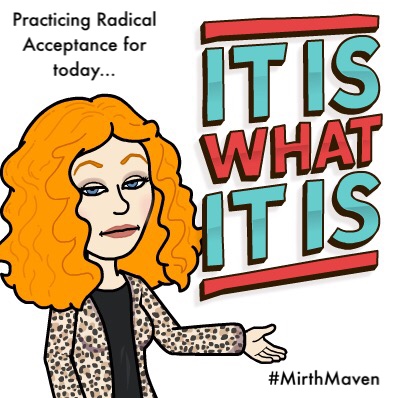
If waiting for your therapist continues to be a huge issue for you, speak to your therapist about getting treatment for practicing Radical Acceptance8. Or if none of this fits for you, then just get a referral to see a different therapist.
At the end of the day, you are always 100% accountable for your life. As the captain of your ship, you can always sail on to the next safe harbor.
4. Lazarus, A. (1997). Brief But Comprehensive Psychotherapy: The Multimodal Way. New York: Springer Publishing Company.
5. Ibid.
6. For this reason, some of my patients have double sessions, where we can do accelerated work and have the advantage of a 90 or 100 minute session to cover a broad reach of material successfully.
8. Brach, T. (2004). Radical Acceptance: Embracing Your Life With the Heart of a Buddha. Bantam Dell: New York, New York.[There are many sources for learning about Radical Acceptance, and it’s also included in the Distress Tolerance module of Dialectical Behavior Therapy. Tara Brach’s book is a wonderful source for delving deep into the process of learning to accept reality and find peace with the imperfections of your life.]
If you heard the news about Russia’s influence affecting the previous election and would like your voice heard …
The Department of Justice is tallying phone calls regarding those who want the 2016 vote audited. A shift of just 55,000 Trump votes to Hillary in PA, MI, & WI is all that is needed to win. They are starting to recognize there really is something off about the election results as they came in. Considering everything that is at stake, a vote audit should be done.
** Call 202-514-2000, choose option #4, and leave a message for the Attorney General’s office. Just state your full name, that you are a US citizen, where you live, and that you would like to add your voice to all those calling for an audit of the 2016 presidential election. **
These things are tallies. Recording time is short. Make it easy for them. They don’t need a long winded message.
SHARE THIS, SPREAD THE WORD. Please copy and paste; do not just hit share.
I just made the call myself, and it went right through. This took two minutes of my time at the most. It was fast and easy. You can do something right now!
Then copy and paste this to your page or any of your group pages. Thanks!
There are a plethora of wonderful quotes and passages on the topic of gratitude.
I thought I’d share a few of mine, with some annotations, and let them continue to spread more good energy in the world!
* * *
“Cultivate the habit of being grateful for every good thing that comes to you, and to give thanks continuously. And because all things have contributed to your advancement, you should include all things in your gratitude.”
~ Ralph Waldo Emerson
“I am too blessed to be stressed and too anointed to be disappointed!”
~ Author Unknown
Ralph Waldo Emerson and this unknown author really grasped the enormity of the amount of goodness which lavishes us at all times. We are typically not thinking about how well gravity keeps us on this Earth, without crushing us; how our bodies work with such precision and accuracy (most of the time); how the air we breathe and the food we eat sustain us. From the micro to vast macro levels, we are swimming in an abundance of complexity and richness. To be in awe of the magnificence of this mosaic of life, and let that gratitude sustain you — regardless of the cash and prizes in your life — is a path to more inner peace.
In my Thursday night DBT Skills Group (Dialectical Behavior Therapy), we recently explored this poem by Pat Schneider (Schneider, 2005) to gain insight into the mystery of the generosity and kindness of the Universe:
The Patience of Ordinary Things
It is a kind of love, is it not?
How the cup holds the tea,
How the chair stands sturdy and foursquare,
How the floor receives the bottoms of shoes
Or toes. How soles of feet know
Where they’re supposed to be.
I’ve been thinking about the patience
Of ordinary things, how clothes
Wait respectfully in closets
And soap dries quietly in the dish,
And towels drink the wet
From the skin of the back.
And the lovely repetition of stairs.
And what is more generous than a window?
* * *
“We tend to forget that happiness doesn’t come as a result of getting something we don’t have, but rather of recognizing and appreciating what we do have.”
~ Frederick Keonig
“Acknowledging the good that you already have in your life is the foundation for all abundance.”
~ Eckhart Tolle
“The quality of your life equals the ratio of appreciation to complaint.”
~ Alan Cohen
Complaining is draining. One of my teachers in NYC once said, “If you would abstain from complaining for 30 days, it would transform your life.” Yes, I took on that challenge and it was an amazing month. I learned that what I focus on increases. When I focus on what’s good, it expands. When I focus on lack, illness, anger, scarcity, exhaustion, it gets worse. In sum, the intense energy I expend on complaining can be flipped to be uses instead in the arena of creative solutions. As it is written, “What goes into someone’s mouth does not defile them, but what comes out of their mouth, that is what defiles them.” (Matt. 15:11.) Let your words be the seeds for a greater tomorrow, consider each word you speak a new seedling that will start to grow. You want to plant loving, smart, solution focused seeds. They will turn into strong action plans, and help you manifest your dreams.
* * *
“Feeling gratitude and not expressing it is like wrapping a present and not giving it.”
~William Arthur Ward
Some people have a difficult time expressing their feelings, even good ones. Feeling grateful and not saying anything about it is a sad loss of the beautiful and healing vibrational power of gratitude. Just saying “Thank You” out loud has a profound shift on your inner chemical factory. It has been proven in many studies how every thought becomes a chemical reaction in your body. (Emoto, 2004)
In the 12 Step world (Alcoholics Anonymous and all the related recovery programs) , it is often said “Grateful people don’t pick up.” The power of gratitude can help a resentful, angry addict focus on what’s working and good, and not feel the need to reach for the substance of choice for self medication, as in “Poor me, poor me, pour me a drink!” Having an “Attitude of Gratitude” is recovery code for focusing on what’s good, and to quit ruminating about what’s bad.
Making a gratitude list before bedtime is a classic and wonderful way to pre-pave the way for a good night’s sleep. Gratitude calms the mind and reconnects to the Source Energy from which all our good comes to us. Here’s an example from one of my clients of one way to write your gratitude list:
“At night, I find written inventories helpful. I keep them brief and to the point, with three columns: plus, minus and gratitude. In the first column, I list things I did well that day…In the second column, I list things I did not do well that day (binged on anger, lied or kept someone waiting). In the final column, I list all the ways in which I am grateful. I try to make this at least as long as my other two columns!”
~ S. P., Massachusetts
Another way to amplify this positive energy is to send thank you notes. I love writing thank you notes in longhand on beautiful stationary because the energy channeled from my hand gets directly transferred to the paper, and then the recipient can feel my gratitude even stronger than via text or email.
Writing thank you notes allows you to experience the deep gratitude and positive goodness a minimum of three times. First, there is the immediate wave of gratitude in the moment of the experience. Second, when I write the thank you note I re-experience the gratitude again. Finally, the third wave of gratitude comes back in a boomerang effect when the recipient calls, texts or emails me to thank me for my thank you note! We often have a wonderful exchange, and the gratitude rises again.
In Conclusion
I invite you to experiment in the laboratory of your life…take on one or more of these practices to experience more gratitude in your life, feel better, and then create more positive results:
Say thank you more often.
See how it feels to write out your gratitudes each day.
Abstain from complaining for 30 days, and focus on your gratitude list instead.
Send out a few thank you notes to people whom have enriched your life, whether for a brief encounter or even for long term relationships.
12 Step Recovery Programs – There are currently over 200 free programs worldwide. After the first three, Alcoholics Anonymous, Gamblers Anonymous and Overeaters Anonymous, the evidence of a strong recovery rate was significant enough to apply the 12 Steps to many other addictions, including nicotine, cocaine, pills, hoarding/clutter, internet, videogames and more. If you are struggling with an addiction, search for a 12 Step program that will help you.
Matthew 15:11, New International Version (NIV).
Emoto, M. (2004). Hidden Messages in Water. Hillsboro, OR: Beyond Words Publishing.
Schneider, P. (2005). The patience of ordinary things. In Another River: new and selected poems. Amherst MA: Amherst Artists and Writers Press.
One of my favorite sources for excellent international (and national) news coverage is a magazine called THE WEEK. It is chock full of great executive summaries, plus the editors of THE WEEK have a healthy sense of humor. They express their humor in many ways, such as with their weekly sidebar/column, “Only in America.” They also have a column for “Good week for/Bad week for” which always gives me a good chuckle, again based on fact checked news stories.
My best laughter therapy from THE WEEK often shows up in The Week Contest, when they ask us to help name something, or label something, or describe something useful to help sort out the news.
The most recent Contest was about creating a new diagnosis for dealing with the current political climate…here are the results, for your therapeutic laughter du jour:
Source: THE WEEK, 10/21/16, page 38:
Last week’s question: The American Psychological Association has found that more than half of Americans identify the 2016 presidential election as a significant source of stress in their lives. Please come up with a psychological term that describes the unique feeling of anxiety induced by this race.
RESULTS:
THE WINNER: “Sufferage” Phyllis Klein, New York City
SECOND PLACE: “ADHD (Another day with Hillary and Donald)” Don Walker, Lexington, Mass.
THIRD PLACE: Democrazy Peg O’Neil, Bloomingdale, N.J.
HONORABLE MENTIONS:
“Strep vote” Ken Kellam III, Dallas
“Campains” Valerie Resnick, New York City
“Polliosis” Dorothy L. Delman, New York City
“POTUS parting depression” Robert Koshiyama, San Francisco
“Boast rhetoric stress disorder” Ken Liebman, Williston, Vt.








 The Lighter Side of Transformation